
Audit your carbon emissions with Speeki Carbon Lens® | Carbon Emissions Verification
ISO 14064 provides an international framework for quantifying, monitoring, reporting and verifying greenhouse gas emissions and removals, establishing credibility in carbon accounting that investors, regulators and stakeholders increasingly demand.
Our history with carbon verification solutions
Since 2020, Speeki has focused entirely on ESG and sustainability. We provide the assurance stakeholders need to trust what companies report. Managing carbon emissions, reducing water use, minimising waste and reducing pollutants are all core parts of effective environmental management.

How Speeki Carbon Lens® works
Whether you are just looking for GHG verification solutions or as part of an overall ESG report assurance project, Speeki can help.
Speeki provides independent third-party verification of organisational GHG inventories prepared under ISO 14064-1 or the GHG Protocol, confirming that Scope 1, 2 and 3 emissions are accurately calculated, appropriately bounded and reported transparently.

Speeki’s added value
ISO 14064 validation combined with AI-driven software to build your carbon accounting and manage your carbon reduction programmes
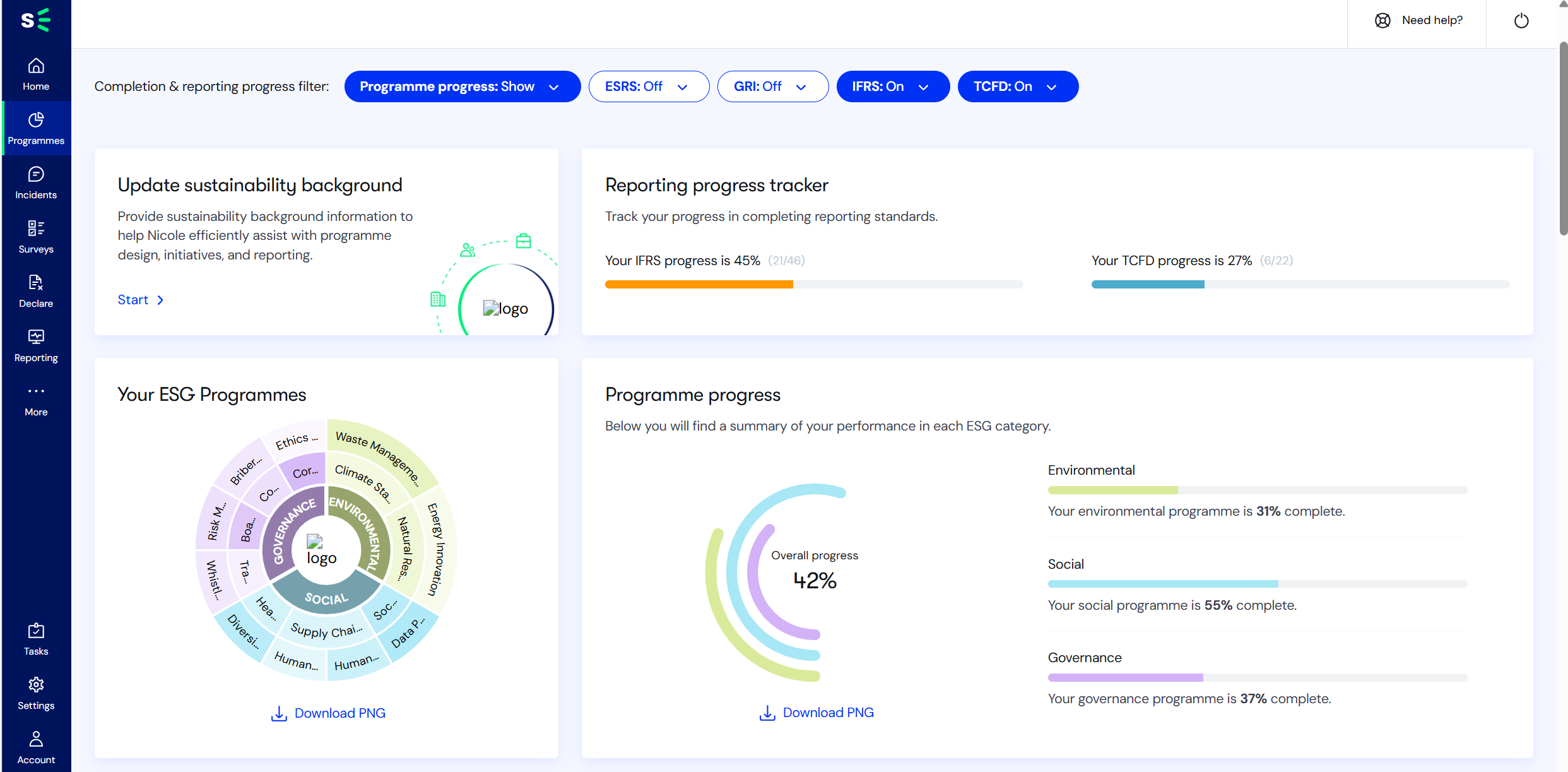
Understanding Speeki's software platform, known as Speeki Engage®. The engine for all Speeki engagements.
Speeki is heavily invested in technology solutions powered by AI. Our view is that the audit industry is trapped in the 1990s using paper-based solutions and Speeki is focused on making things better, cheaper and faster.
If you need a carbon accounting system, we can help. Speeki Engage® and its carbon module provide the technology to manage Scope 1, 2 and 3 in one system.
Remember, it is not just about verifying the numbers you produce. It is your carbon management system, your inventories, your boundaries and your entire governance model for managing carbon.
ISO 14064 certification process explained
-
Before engaging GHG verification services, organisations must understand verification requirements and their emissions profile. Speeki helps you understand the difference between limited assurance, which provides moderate confidence through analytical procedures and inquiry, and reasonable assurance, which provides high confidence through detailed testing and substantive procedures. We guide the selection of the appropriate assurance level based on regulatory requirements, stakeholder expectations, materiality of emissions and cost-benefit considerations.
We help you determine verification scope, including whether to verify Scope 1 and 2 emissions only, which is mandatory under many regulations, or to include Scope 3 value chain emissions, which are increasingly expected by investors and essential for science-based targets. We also advise on whether to verify an organisational-level inventory or facility-specific emissions and which reporting period and organisational boundaries apply.
The getting started phase includes reviewing your GHG inventory methodology to confirm alignment with ISO 14064-1 or GHG Protocol requirements before verification begins. This includes identifying potential data gaps or methodology issues that could complicate verification, understanding materiality thresholds and how errors or uncertainties affect verification outcomes and establishing realistic timelines based on data availability, audit scheduling and disclosure deadlines.
For organisations seeking carbon project validation under ISO 14064-2, getting started includes understanding additionality requirements, baseline scenario development, quantification methodology selection, monitoring plan design and validation timing, which occurs before project implementation to establish credibility.
We also help you understand what documentation verifiers require, including activity data, emission factors, calculation methodologies, quality assurance procedures, organisational charts, consolidation approaches and Scope 3 screening and calculations. We explain what verification involves, such as document review, data testing, site visits, personnel interviews and recalculations, and what verification statements provide, including the assurance opinion, materiality assessment, findings and recommendations.
Understanding these fundamentals before engaging verification helps prevent delays, reduces verification costs through better preparation and improves verification outcomes.
-
Effective GHG verification requires organisational capability to quantify emissions accurately, maintain robust documentation and understand verification expectations.
Speeki delivers GHG accounting and verification readiness training covering greenhouse gas fundamentals, including climate science basics, emissions sources, global warming potentials and carbon cycle concepts. Training also covers GHG accounting principles, including the five principles from ISO 14064-1 and the GHG Protocol: relevance, completeness, consistency, transparency and accuracy. We address organisational boundary setting, including equity share, financial control and operational control approaches, scope definitions and source categorisation across Scope 1, Scope 2 and Scope 3, emission quantification methodologies, emission factors and activity data selection, uncertainty assessment and verification preparation.
Training is tailored to different roles, including finance and data teams collecting activity data and maintaining GHG accounting systems, sustainability teams preparing GHG inventories and managing verification processes, operational personnel understanding emission sources and improvement opportunities and executives responsible for climate disclosure obligations and governance.
We provide sector-specific training recognising that GHG accounting complexity varies across industries. Manufacturing organisations focus on process emissions and energy consumption, logistics companies on transportation emissions and supply chain Scope 3, financial institutions on financed emissions in investment portfolios and real estate companies on building energy use and tenant emissions.
Training includes practical exercises using organisational data, common verification findings and how to prevent them, preparation of documentation that meets verifier requirements and effective responses to verification inquiries.
For organisations pursuing carbon project validation, training covers additionality demonstration, baseline scenario development, quantification methodology selection from recognised standards, monitoring plan design and validation preparation.
Training builds internal capability to support efficient verification, reduces verification costs through better preparation and fewer findings and strengthens organisational competence in GHG management beyond compliance with disclosure requirements.
-
The application phase involves preparing your GHG inventory or carbon project documentation for independent verification.
For organisational GHG inventories, this includes establishing or refining organisational boundaries and consolidation approaches, determining which entities to include and selecting the appropriate boundary-setting method. It also includes comprehensive Scope 1 and 2 emissions quantification, covering identification of emission sources, collection of activity data, selection of appropriate emission factors, emissions calculation and documentation of methodologies and assumptions. Material Scope 3 emissions are assessed by determining which of the 15 categories are relevant, prioritising significant categories and applying spend-based, activity-based or supplier-specific calculation approaches.
The process also includes documenting data management systems and quality assurance procedures, assessing uncertainty in emissions calculations and preparing a GHG inventory report in line with ISO 14064-1 or the GHG Protocol. Required disclosures include the description of the organisation and boundaries, reporting period, emissions summaries by scope and source category, methodologies and emission factors used, data quality assessment and any exclusions or special circumstances.
Organisations should establish data collection and calculation processes that can be sustained annually, implement internal quality assurance to review calculations before verification, maintain clear documentation trails from source data to final emissions totals and establish governance to ensure appropriate oversight of GHG accounting.
For carbon projects seeking validation under ISO 14064-2, the application phase includes developing the project description, demonstrating additionality, quantifying baseline and project emissions, calculating net emission reductions, designing monitoring plans and assessing leakage before preparing comprehensive project documentation.
Application phase preparation directly affects verification efficiency and outcomes. Well-prepared inventories with robust documentation, transparent methodologies and effective quality assurance typically proceed through verification with minimal findings, while poorly prepared inventories may result in extended timelines, significant findings and qualified verification opinions that reduce disclosure credibility.
-
Before formal verification engagement, Speeki offers readiness assessments to identify issues that could delay verification or result in qualified opinions.
The readiness assessment reviews your GHG inventory documentation for completeness, including required disclosures, documented methodologies, stated assumptions and identified data sources. It examines organisational boundary setting and consolidation approaches for consistency with the stated methodology, reviews emission quantification methods for alignment with ISO 14064-1 or the GHG Protocol and tests calculation accuracy through sample recalculations. The assessment also evaluates data quality and the reliability of activity data and emission factors, reviews Scope 3 screening and materiality assessment, examines uncertainty quantification approaches and identifies methodology inconsistencies, data gaps or documentation deficiencies that should be addressed before verification.
The assessment provides a preliminary materiality evaluation to determine whether any errors or uncertainties could affect the verification opinion. Where applicable, it reviews prior-year inventories to identify base year recalculation requirements or consistency issues and examines whether unusual circumstances such as mergers, acquisitions, divestitures, methodology changes or new emission sources are appropriately disclosed and accounted for.
For carbon projects, the readiness assessment reviews the credibility of additionality demonstrations, the conservativeness and defensibility of baseline scenarios, the appropriateness of quantification methodologies, the feasibility of monitoring plans and the completeness of project documentation.
Readiness assessments typically take place four to eight weeks before planned verification, allowing sufficient time to address identified issues without affecting disclosure deadlines. Organisations benefit by resolving issues before formal verification begins, reducing the risk of delays or rework, gaining early insight into potential verification outcomes and increasing confidence that verification will proceed efficiently.
While optional, readiness assessments significantly reduce verification risk, particularly for first-time verification, major methodology changes, expanded scopes or organisations facing tight disclosure timelines.
-
Most organisations require annual GHG verification to support mandatory climate disclosures, voluntary sustainability reporting, science-based target tracking or carbon neutrality claims.
Speeki provides ongoing verification services that support efficient annual assurance through verifier familiarity with organisational operations, data systems and emission sources developed through prior engagements. Verification efficiency typically improves over time as data management systems mature, methodologies stabilise, internal quality assurance strengthens and both the organisation and verifier develop a shared understanding of the emissions profile and accounting approach.
Ongoing verification considers whether base year recalculations are required due to organisational changes such as mergers, acquisitions, divestitures or changes in consolidation approach, as well as methodology changes or the identification of significant errors. It also verifies consistency between current and prior-year inventories, unless changes are clearly disclosed and justified, identifies emission trends or anomalies requiring explanation and assesses alignment between emissions performance and stated targets or commitments.
Organisations should apply continuous improvement to GHG accounting based on verification findings and recommendations. This may include improving data quality, such as moving from spend-based to activity-based Scope 3 estimates or replacing generic emission factors with supplier-specific data, expanding Scope 3 coverage as capability improves, strengthening internal quality assurance to prevent recurring findings and enhancing disclosure transparency in response to evolving stakeholder expectations.
-
GHG verification timing depends on inventory complexity, organisational size, number of facilities, Scope 3 coverage, data quality and the selected assurance level.
Limited assurance verification of straightforward organisational inventories covering Scope 1 and 2 emissions typically takes two to four weeks, including planning, documentation review, data testing, site visits where applicable and reporting.
Reasonable assurance verification generally requires four to eight weeks due to more extensive substantive procedures and detailed testing. Complex inventories with multiple facilities, diverse emission sources, extensive Scope 3 coverage across several categories or first-time verification may require eight to twelve weeks or longer.
Organisations should plan verification to allow sufficient time before disclosure deadlines. Regulatory filings usually have fixed deadlines, investor reporting aligns with annual report publication and sustainability reporting may be more flexible but should remain consistent year on year. Verification should begin only once the GHG inventory is complete, calculations are finalised, internal quality assurance has been performed and supporting documentation is ready. Starting verification before this point often creates inefficiencies and extends timelines.
Organisations with calendar year reporting periods typically conduct verification in Q1, after year-end activity data is finalised, with verification statements issued in March or April to support annual reports, regulatory filings or investor disclosures due in April or May.
Organisations should also consider verifier availability. Many organisations schedule verification in Q1, which can create capacity constraints, so earlier scheduling or additional time buffers may be required during peak periods.
-
As an independent verification body, Speeki maintains strict separation between implementation consulting and verification services to protect independence and credibility.
We do not provide GHG accounting consulting, inventory preparation services, methodology selection advice or emission reduction recommendations that would compromise our ability to independently verify your GHG statements.
However, Speeki provides training and technology that help organisations prepare GHG inventories and carbon projects for independent verification without affecting verifier independence.
Speeki delivers GHG accounting training covering ISO 14064-1 and GHG Protocol requirements, organisational boundary setting and consolidation approaches, Scope 1, 2 and 3 quantification methodologies, emission factor selection and activity data collection, uncertainty assessment and verification preparation. The training is educational rather than prescriptive, explaining how GHG accounting works, what verification requires and which methodologies exist, without directing your specific accounting choices.
Training includes sector-specific content reflecting different GHG accounting challenges across industries, including manufacturing, logistics, oil and gas, agriculture, financial services and real estate. Training formats include public courses, private team sessions, virtual delivery and train-the-trainer programmes. Topics include common verification findings and how to avoid them, documentation that meets verifier expectations, responding to verification inquiries and maintaining internal data quality controls.
Speeki’s Engage® technology platform supports GHG accounting and verification preparation. Engage® enables structured activity data collection, emissions calculation using built-in and custom emission factors, Scope 3 screening and quantification, uncertainty assessment, documentation management with clear audit trails, verification preparation and performance tracking over time.
The platform aligns GHG accounting with ISO 14064-1 and GHG Protocol requirements, supports internal quality assurance and facilitates efficient verification through organised and accessible data, without providing prescriptive consulting that would compromise independence.
Organisations may use Engage® independently or with third-party consultants for inventory development, and engage Speeki solely for independent verification.
This separation safeguards verifier independence, maintains stakeholder confidence and ensures that verification opinions reflect a genuinely independent third-party assessment rather than verification of the verifier’s own work.
-
GHG verification costs vary based on organisational size, inventory complexity, number of facilities, Scope 3 coverage, data quality and assurance level.
Verification investment typically includes training, technology and verification engagement fees. Training costs are usually in the range of USD 3,000 to 10,000 depending on participant numbers, customisation and delivery format. Engage® platform subscription pricing for GHG accounting and verification preparation varies by organisation size and usage. Verification engagement fees depend on scope and assurance level.
Limited assurance verification for small to medium-sized organisations with straightforward Scope 1 and 2 inventories covering one or a small number of facilities typically ranges from USD 8,000 to 25,000. Reasonable assurance verification generally ranges from USD 15,000 to 50,000 due to more extensive procedures. Large organisations with multiple facilities, complex operations and comprehensive Scope 3 coverage may incur costs of USD 50,000 to 150,000 or more for reasonable assurance.
Verification costs increase with Scope 3 complexity. Basic Scope 3 screening adds modest cost, while detailed quantification across multiple categories using supplier-specific data requires significantly more verification effort. First-time verification is typically more expensive due to the initial effort required to understand organisational operations and establish the verification approach. Ongoing annual verification benefits from efficiency gains as verifier familiarity and data system maturity improve.
Organisations should also budget for internal resources, including staff time for data collection, documentation preparation, responding to verification inquiries and participating in site visits or interviews. Additional costs may include data system improvements arising from verification findings and third-party consultant support for inventory preparation where used.
Carbon project validation and verification costs depend on project type, size and complexity. Validation typically ranges from USD 15,000 to 100,000 or more, with periodic verification ranging from USD 10,000 to 75,000 or more depending on project scale and quantification complexity.
While verification represents a material annual cost, it supports regulatory compliance, investor confidence, access to sustainable finance, credible climate claims and improved internal understanding of emissions data quality and performance.
Organisations can manage verification costs by improving data quality and documentation, maintaining consistent methodologies year on year, strengthening internal quality assurance, scheduling verification outside peak periods and establishing ongoing verification arrangements that deliver efficiency over time.
Speeki offers transparent pricing aligned with verification scope, effort and complexity, providing credible third-party assurance that meets regulatory expectations and stakeholder requirements.

Want to learn more about how to build a carbon emissions system in line with the GHG Protocol or ISO 14064?
Explore our insights to understand the role of these guidelines and how they should be implemented.
Six key reasons to get your carbon emissions verified or validated by Speeki
1. Reduce emissions and find gaps.
4. Keep banks and investors happy with your progress.
2. Find opportunities to improve carbon reductions.
5. Improve reputation in carbon management.
3. Meet customer rules on tenders.
6. Meet increasing ESG reporting requirements and reduce assurance costs.
Need technology to implement your carbon emissions calculations and management system and reduce administrative burden by 60% or more?
Speeki offers an AI-powered platform called Engage®, available for client use.
Speeki’s Engage® technology platform supports GHG accounting and verification preparation. Engage® enables structured activity data collection across organisational locations and emission sources, emissions calculation using built-in and custom emission factors, Scope 3 screening and quantification, uncertainty assessment, documentation management with clear audit trails from source data through final calculations, verification preparation and performance tracking over time.
The platform structures GHG accounting in line with ISO 14064-1 and GHG Protocol requirements, keeps documentation accessible during verification, supports internal quality assurance through calculation checks and validation rules and facilitates efficient verification through organised data presentation.
Engage® is designed to support verification preparation by providing structure and calculation tools, without offering prescriptive consulting that would compromise verifier independence. Organisations may use Engage® independently or with third-party consultants for inventory development, then engage Speeki solely for independent verification services.
This separation maintains verification independence, supports stakeholder confidence and ensures verification opinions reflect a genuinely independent third-party assessment.

Want to learn more about implementing a carbon management system?
Check out the Speeki Academy.
Request an integrated engagement by bundling multiple projects to save time and cost.
One audit team. One coordinated project.