
Every company should have a system that manages its impact on biodiversity.
ISO 17298 is the answer.
ISO 17298, published in October 2025, is the first international standard enabling organisations to systematically address biodiversity within their strategies and operations through a structured biodiversity management framework.
Our history with biodiversity solutions
Since 2020, Speeki has been entirely focused on ESG and sustainability, providing the trust stakeholders need to believe the information companies share with them.
Managing carbon emissions, reducing water usage, minimising waste and controlling pollutants are all core elements of effective environmental management. The biodiversity standard released in 2025 is now being adopted by organisations to identify, manage and reduce biodiversity risks and opportunities.

ISO 17298 is a certifiable standard that requires organisations to identify material dependencies on ecosystem services, assess impacts on biodiversity, evaluate biodiversity-related risks and opportunities, establish formal biodiversity action plans, implement objectives with measurable indicators and continuously monitor and improve performance.

Speeki’s added value
ISO 17298 certification plus AI-driven software to manage your biodiversity management system
ISO 17298 is not a reporting standard. It is the standard used to build a biodiversity management system, with the outputs of that system feeding into ESG reporting frameworks such as TNFD.
Effective TNFD reporting is extremely difficult without an ISO 17298 programme in place.
ISO 17298 certification process explained
-
Before implementing ISO 17298, organisations need to understand both the standard’s requirements and their own biodiversity context.
Speeki provides early-stage advisory support to help organisations understand how ISO 17298 applies to their operations, sectors and geographic locations. This includes defining the appropriate scope of the biodiversity approach, such as whether to apply it across all operations or focus initially on sites with the highest biodiversity materiality, whether to include value chain activities and sphere of influence and how to set boundaries that balance ambition with organisational capability.
We conduct preliminary biodiversity context reviews that examine proximity to critical habitats, operations in biodiversity-sensitive regions, sector-specific biodiversity pressures, existing environmental or sustainability initiatives that can support biodiversity integration and stakeholder expectations relating to nature-related performance.
This initial phase includes a gap analysis comparing existing biodiversity-related policies and actions against ISO 17298 requirements. This identifies what is already in place and can be built upon, as well as what needs to be developed.
We also help organisations understand the business case for biodiversity management, including regulatory drivers such as emerging nature disclosure requirements and biodiversity due diligence legislation, investor expectations linked to TNFD adoption and nature-related risk integration, operational risks associated with ecosystem service dependencies and supply chain impacts and market opportunities such as access to green finance and nature-positive differentiation.
The getting started phase establishes realistic ISO 17298 implementation timelines, typically ranging from 6–18 months, depending on organisational size, biodiversity management maturity, data availability, scope and resource constraints.
-
Effective ISO 17298 implementation requires organisations to build capability to understand biodiversity concepts, assess nature-related impacts and dependencies and manage biodiversity in a structured way.
Speeki delivers training programmes covering biodiversity fundamentals such as ecosystem services, biodiversity drivers and pressures and the DPSIR framework, alongside ISO 17298 requirements and how they apply to your organisational context. Training also addresses biodiversity impact and dependency assessment methodologies, identification of biodiversity-related risks and opportunities, application of the mitigation hierarchy, biodiversity action planning, setting SMART biodiversity objectives, selecting indicators, stakeholder engagement and biodiversity performance monitoring and reporting.
Training is tailored to different organisational roles. Executive leadership sessions focus on biodiversity as a strategic risk and opportunity, governance implications and board oversight responsibilities. Operational manager training addresses implementation of biodiversity actions, integration into site management and procurement decisions and performance monitoring. ESG and sustainability teams are trained on materiality assessment, use of relevant tools and frameworks such as TNFD, CSRD and IFRS and preparation for certification audits. Supply chain teams focus on assessing supplier biodiversity impacts and integrating biodiversity considerations into procurement practices.
Training is practical and grounded in your organisation’s actual activities, locations and value chains rather than generic examples. This helps teams understand how biodiversity issues arise in their operations, whether through water dependency in beverage manufacturing, pollination reliance in agriculture, land-use impacts in property development or raw material sourcing in fashion and textiles.
Programmes include hands-on workshops to develop initial impact and dependency assessments, draft biodiversity objectives and design action plans. This builds confidence and capability that accelerates subsequent implementation phases.
-
The application phase translates ISO 17298 requirements into operational practice across the organisation. Speeki supports implementation by helping establish the documented biodiversity management system required by the standard.
This includes comprehensive biodiversity impact and dependency assessments across the defined scope. We support systematic identification of material ecosystem service dependencies, including provisioning, regulating, cultural and supporting services, alongside material biodiversity impacts using recognised driver classifications such as land and sea use change, direct exploitation, climate change, pollution and invasive species. Associated biodiversity-related risks, including physical, transition and systemic risks, and opportunities are also assessed.
Impacts, dependencies, risks and opportunities are prioritised based on materiality, stakeholder expectations, organisational capability and local biodiversity context. This ensures resources are focused on the issues that matter most.
Implementation also includes defining a biodiversity ambition statement that reflects organisational values, setting SMART biodiversity objectives and developing detailed biodiversity action plans aligned with the mitigation hierarchy of avoid, minimise, restore and offset. Objectives balance fundamental outcomes, such as improved habitat condition or species recovery, with practical management actions such as land management changes or procurement policy updates. Monitoring indicators are established using the DPSIR framework and stakeholder engagement processes are defined.
Biodiversity management is integrated with existing systems, including ISO 14001 environmental management, ISO 26000 social responsibility and enterprise risk management. This ensures biodiversity is embedded in business processes rather than treated as a standalone initiative.
Implementation typically involves piloting actions at selected sites, testing monitoring approaches, refining indicators based on early data and establishing continual improvement mechanisms. This allows the biodiversity approach to remain adaptive as operations evolve, scientific understanding advances and stakeholder expectations change.
-
Before the formal certification audit, Speeki conducts readiness assessments to verify that your biodiversity management system meets ISO 17298 requirements and to identify any gaps requiring remediation.
The readiness assessment reviews documentation completeness, including scope definition, impact and dependency assessments, risk and opportunity analyses, biodiversity ambition and objectives, action plans, monitoring indicators, stakeholder engagement records and performance data. It evaluates whether materiality assessments appropriately identify and prioritise significant biodiversity matters using credible methodologies and scientific evidence.
We assess the quality and ambition of biodiversity objectives against SMART criteria, review action plans for feasibility and alignment with the mitigation hierarchy and examine indicator selection to ensure appropriate coverage of drivers, pressures, states, impacts and responses. Monitoring data quality and performance analysis are also reviewed.
The assessment includes interviews with personnel responsible for biodiversity management and site visits to locations within scope to examine how biodiversity actions are implemented in practice. Evidence of stakeholder engagement and continual improvement mechanisms is also assessed.
Any non-conformities or gaps that could prevent certification are clearly identified, with specific and practical recommendations provided to support remediation before the formal audit.
Readiness assessments are typically conducted one to three months before the planned certification audit. This allows sufficient time to address identified issues while maintaining implementation momentum.
This pre-audit verification significantly increases certification success by ensuring organisations enter formal audits with robust and compliant biodiversity management systems, rather than discovering gaps during certification that delay approval, require re-audits and undermine credibility with stakeholders expecting timely certification.
-
The ISO 17298 certification audit provides independent third-party verification that your biodiversity management system conforms to the standard’s requirements. Certification is conducted through a two-stage audit process.
Stage 1 is a documentation review. Auditors examine the completeness of your biodiversity management system, including scope definition, policies, impact and dependency assessments, risk and opportunity analyses, biodiversity ambition and objectives, action plans, indicators and supporting procedures. The purpose of Stage 1 is to confirm readiness and identify any fundamental gaps before the full implementation audit.
Stage 2 is the comprehensive implementation audit. This involves site visits, interviews with relevant personnel, review of stakeholder engagement evidence and examination of objective evidence to confirm that the biodiversity management system operates effectively in practice.
During the audit, assessors evaluate whether the defined scope appropriately sets boundaries and applicability, whether impact and dependency assessments identify material biodiversity issues using credible methodologies, whether biodiversity objectives meet SMART criteria and reflect appropriate ambition and whether action plans are feasible and aligned with the mitigation hierarchy. Auditors also review whether monitoring indicators track both management actions and biodiversity outcomes using the DPSIR framework, whether stakeholder engagement processes involve relevant interested parties appropriately and whether continual improvement mechanisms support adaptive management.
Site visits are conducted at locations included within scope to observe implementation of biodiversity actions, review monitoring and data collection processes, interview personnel responsible for implementation and assess how local ecological context is considered in decision-making.
The certification audit concludes with formal findings. These may include major non-conformances, which must be resolved before certification can be granted, minor non-conformances requiring corrective action within a defined timeframe and opportunities for improvement. Where conformance is demonstrated, the ISO 17298 certificate is issued.
Certification is typically valid for three years, subject to successful completion of annual surveillance audits to maintain conformance.
-
ISO 17298 biodiversity management system implementation and certification typically requires 6–18 months from initiation to certification, depending on organisational size, complexity, biodiversity management maturity, geographic scope and resource availability.
Organisations with established environmental management systems, such as ISO 14001, or mature sustainability frameworks can often leverage existing processes and governance, reducing implementation timelines to approximately 6–9 months. Organisations without existing biodiversity initiatives or systematic environmental management typically require 12–18 months.
A typical implementation timeline includes the following phases:
Initial gap analysis and scoping (4–6 weeks)
Defining certification objectives, setting scope boundaries and assessing the current state of biodiversity management.Training and capability building (6–8 weeks)
Building internal understanding of biodiversity fundamentals, ISO 17298 requirements and assessment methodologies.Biodiversity impact and dependency assessment (8–12 weeks)
Conducting systematic analysis of ecosystem service dependencies, biodiversity impacts and related risks and opportunities across operations and relevant value chains.Ambition setting and objective definition (4–6 weeks)
Establishing biodiversity ambition, defining SMART objectives and securing organisational commitment.Action plan development (8–10 weeks)
Designing biodiversity actions aligned with the mitigation hierarchy, defining monitoring indicators, assigning responsibilities and allocating resources.Implementation and monitoring (12–24 weeks)
Executing biodiversity actions, collecting baseline data, refining indicators and demonstrating system operation.Readiness assessment (2–4 weeks)
Conducting a pre-certification review to identify remaining gaps and confirm audit readiness.Certification audit (2–3 weeks)
Completing Stage 1 documentation review and Stage 2 implementation audit.
Implementation timelines should also account for external factors such as seasonal constraints affecting biodiversity monitoring, stakeholder engagement timelines involving local communities or conservation organisations and internal business cycles such as budgeting and strategic planning.
Expedited certification may be possible for smaller organisations or narrowly scoped systems. However, shortening timelines should not compromise the rigour of biodiversity assessments or the quality of action planning, as superficial implementation undermines certification value and creates challenges during surveillance and recertification.
-
As an independent certification body, Speeki maintains strict separation between implementation consulting and certification to preserve audit independence and credibility. We do not provide implementation consulting, gap remediation or advisory services that would compromise our ability to independently certify your biodiversity management system.
Speeki supports organisations through training and technology, enabling effective implementation of ISO 17298 without compromising certification integrity.
Speeki delivers ISO 17298 training programmes that build understanding of biodiversity management and the standard’s requirements. Training is educational rather than prescriptive. It explains how ISO 17298 works, what conformance requires and which recognised methodologies can be applied, without directing organisations on specific implementation decisions.
Training covers biodiversity fundamentals and ecosystem services, ISO 17298 requirements, biodiversity impact and dependency assessment approaches, identification of biodiversity-related risks and opportunities, application of the mitigation hierarchy, biodiversity action planning principles, SMART objective setting, indicator development using the DPSIR framework, stakeholder engagement approaches and preparation for certification audits.
Speeki’s Engage® technology platform provides structured tools to support ISO 17298 implementation and ongoing biodiversity management. Engage® supports systematic data collection, impact and dependency tracking, risk assessment documentation, action plan management, indicator monitoring, performance reporting, stakeholder engagement records and certification preparation.
The platform helps organisations structure their biodiversity management system in line with ISO 17298, maintain audit-ready documentation, track implementation progress, monitor performance over time and prepare for surveillance and recertification audits. Engage® provides structure and tools without delivering prescriptive consulting that would compromise certification independence.
Organisations may use Engage® independently or work with third-party consultants for implementation support, engaging Speeki for training and certification services only.
-
ISO 17298 certification costs vary depending on organisational size, number of sites, geographic scope, value chain complexity and existing biodiversity management maturity.
Certification investment typically includes several components.
Training costs usually range from USD 5,000 to 15,000, depending on participant numbers, level of customisation and whether delivery is in person or virtual.
Implementation support costs vary widely based on the support model and organisational complexity. Targeted technical assistance or limited-scope support may start around USD 20,000, while full implementation programmes for complex organisations may exceed USD 100,000.
Readiness assessment costs are typically in the range of USD 5,000 to 15,000 and cover pre-certification gap analysis and conformance verification.
Certification audit fees generally range from USD 10,000 to 50,000 or more, depending on organisational size, number of sites audited and scope complexity.
As an overall guide, small organisations with a single site and limited value chain scope may invest approximately USD 40,000 to 80,000 for training, implementation support and certification. Medium-sized organisations with multiple sites or more complex value chains typically invest USD 80,000 to 200,000. Large multinational organisations with extensive operations, global supply chains and broad biodiversity scope may invest USD 200,000 to 500,000 or more, particularly where biodiversity management is implemented across multiple geographies and ecosystem contexts.
Beyond direct certification costs, organisations should also plan for internal resource requirements. These include staff time for assessments, action planning, monitoring, documentation and audit participation, as well as the cost of implementing biodiversity actions such as habitat restoration, land management changes or supply chain interventions. Additional costs may include biodiversity monitoring and data collection activities, such as ecological surveys and indicator measurement, and stakeholder engagement activities including community consultation and conservation partnership development.

Want to learn more about how to build a biodiversity management system in line with ISO 17298?
Explore our insights to understand the standard’s requirements and how they should be implemented in practice.
Six key reasons to get certified
1. Reduce biodiversity impact.
4. Find revenue opportunities through biodiversity and product improvements.
2. Find opportunities to improve biodiversity.
5. Improve reputation, integrity and customer trust through better management.
3. Meet customer rules on biodiversity terms and win more business.
6. Meet increasing ESG reporting requirements and reduce assurance costs.
Need technology to implement your biodiversity management system and reduce administrative effort by 60% or more?
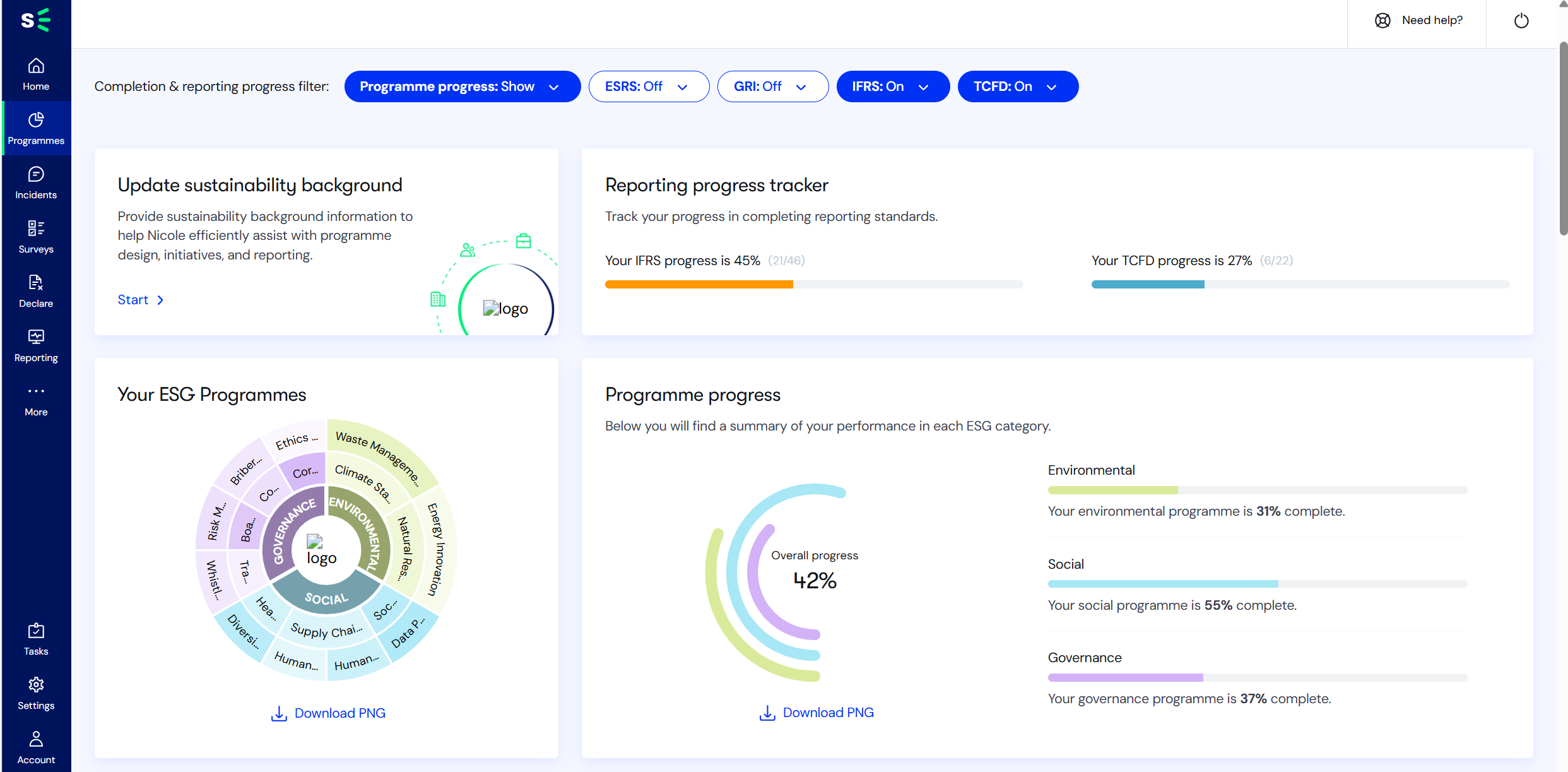
Speeki provides an AI-powered platform, Engage®, available for use by clients.
Speeki’s Engage® technology platform supports ISO 17298 implementation and ongoing biodiversity management. It enables systematic biodiversity data collection, impact and dependency tracking, risk assessment documentation, action plan management, indicator monitoring, performance reporting, stakeholder engagement records and certification preparation.
The platform helps organisations structure their biodiversity management system in line with ISO 17298 requirements, maintain documentation accessible during certification audits, track implementation progress, monitor performance data over time and prepare for surveillance and recertification audits.
Engage® is designed to support certification preparation by providing structure and tools without delivering prescriptive consulting that would compromise independence. Organisations may use Engage® independently or work with third-party consultants for implementation support, engaging Speeki solely for training and certification services.

Want to learn more about implementing a biodiversity management system and achieving certification?
Explore the Speeki Academy.
Gain an integrated certification by bundling multiple projects to save time and cost.
One audit team. One coordinated project.