
Every organisation should have a system that supports safe and effective whistleblowing.
ISO 37002 is the answer.
Speeki has a long heritage in whistleblowing.
Our experts have been involved in designing, building, reviewing, auditing and certifying whistleblowing systems around the world.
Our history with whistleblowing
Scott Lane brings nearly two decades of specialised expertise in whistleblowing solutions.
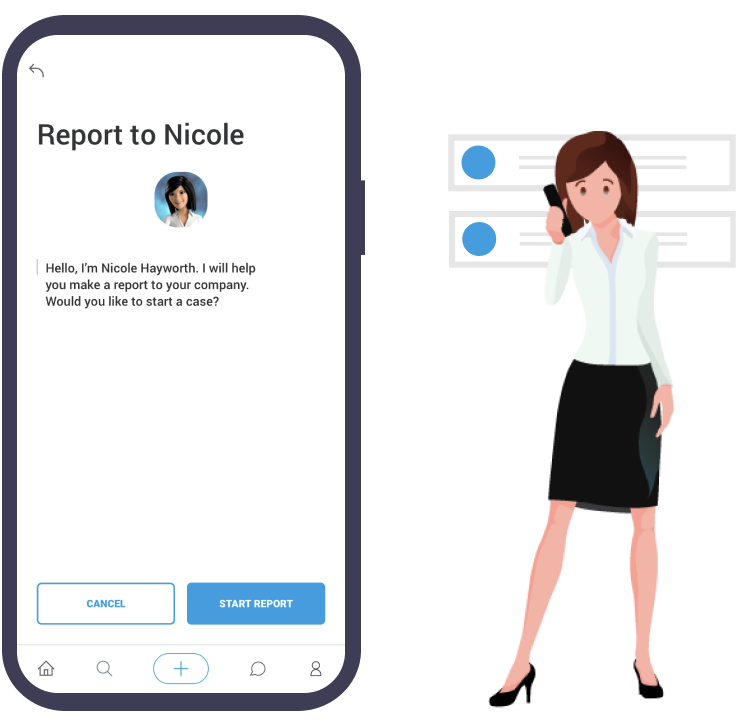
In 2020, Speeki launched its whistleblowing solutions powered by Nicole® AI. This approach moved whistleblowing away from traditional call centres towards AI-based chat solutions.
Following the release of ISO 37002 guidelines, Speeki expanded its services to support assurance aligned with the standard.

Speeki’s added value
ISO 37002 certification combined with an AI-powered whistleblowing reporting system and AI-driven software to manage your whistleblowing programme
Unlike most certification bodies, we have in-house experience across all these areas with our own qualified auditors. We can audit multiple areas at the same time during a single audit, saving you time and cost.
ISO 37002 certification process explained
-
Beginning your ISO 37002 whistleblowing management system work starts with assessing how your organisation currently handles concerns raised by employees, contractors, suppliers and other stakeholders.
The first step is a gap analysis that reviews existing speak-up arrangements against the standard’s requirements. This includes intake channels, case management processes, confidentiality protections, investigation procedures, safeguards against retaliation and governance oversight.
This initial assessment often highlights weaknesses such as reporting channels that are not fully confidential, inconsistent investigation practices, inadequate protection for reporters, poor case tracking and limited management visibility into the health of the speak-up culture.
ISO 37002 provides a structured framework to move from ad hoc complaint handling to a formal management system that encourages reporting, protects whistleblowers, supports consistent investigations and demonstrates organisational commitment to ethical conduct.
Organisations typically adopt ISO 37002 to respond to regulatory expectations, strengthen governance, build stakeholder trust and improve early detection of misconduct. Certification demonstrates maturity of the whistleblowing system and a proactive approach to ethical risk management.
Most organisations complete the certification process within six to twelve months, depending on size, geographic footprint and existing speak-up arrangements. The outcomes include earlier identification of issues, reduced regulatory and reputational risk, stronger employee trust and clearer evidence of ethical culture for regulators, investors and business partners.
-
Implementing ISO 37002 effectively requires specialised capability beyond general compliance training. Teams need to understand the practical realities of whistleblowing, including impartial case handling, fair investigation techniques and the legal protections that support speaking up across different jurisdictions.
HR professionals, compliance teams, legal counsel, internal audit and managers involved in handling concerns must be able to receive reports appropriately, assess issues objectively, manage investigations consistently, protect reporters from retaliation and close cases in a controlled and defensible way.
Speeki’s two-day and three-day ISO 37002 training courses are designed to build this capability. The courses walk through each requirement of the standard using practical case examples, investigation scenarios and applied exercises.
Participants learn how to design effective reporting channels, establish case intake and assessment processes, conduct proportionate investigations, implement protections against retaliation, measure speak-up culture and maintain the documentation required for certification.
The three-day course includes additional modules covering complex investigations, sensitive disclosures and preparation for certification assessment.
Delivered on site or remotely, the training helps establish consistent standards across HR, legal, compliance and management. It supports the development of a mature whistleblowing system and strengthens organisational capability to manage concerns fairly, consistently and professionally.
-
A key principle of ISO 37002 implementation is applying a risk-based approach to the design of reporting channels, allocation of investigation resources and protection of whistleblowers.
Not all concerns carry the same level of risk. A report of minor policy non-compliance requires a different response from allegations of fraud, corruption or serious safety breaches. ISO 37002 requires responses to be proportionate. Reporting channels should be accessible to all potential reporters, while investigation scope, urgency and senior management involvement should reflect the seriousness and credibility of the concern.
Risk profiles differ by sector and operating context. A pharmaceutical organisation faces different whistleblowing risks from a professional services firm, yet both can meet ISO 37002 requirements by designing systems aligned to their specific exposure. This requires assessing the types of misconduct most likely to occur and those that would cause the greatest harm, then ensuring the whistleblowing system is capable of identifying and addressing those risks.
Higher-risk areas typically require multiple reporting channels, stronger investigation capability, enhanced protections for whistleblowers and appropriate board-level oversight. Lower-risk matters can be managed through more streamlined processes, provided they remain fair and consistent.
The risk-based approach also applies to retaliation prevention. Reports involving serious misconduct or senior individuals require stronger safeguards than routine operational concerns.
Organisations that maintain this proportionality avoid overburdening their systems with unnecessary process while ensuring serious issues receive the attention and resources needed to prevent regulatory escalation or reputational damage.
-
The difference between successful ISO 37002 certification and problematic audit outcomes often reflects how thoroughly the whistleblowing system has been tested before external assessment.
Organisations may spend months establishing speak-up channels and procedures, only to identify weaknesses during audits. Common issues include investigation files with incomplete documentation, case handlers unable to explain their approach, insufficient protection for whistleblowers and reporting channels that are not fully accessible or confidential.
Speeki’s pre-certification services are designed to identify and address these issues early. A comprehensive gap analysis reviews the whistleblowing management system against ISO 37002 requirements, highlighting missing procedures, incomplete case records, weak governance oversight and gaps in whistleblower protection that could result in non-conformities.
This is followed by mock audits that reflect the certification process. These include interviews with case handlers and investigators, reviews of closed cases and investigation files, testing of reporting channel accessibility and confidentiality, examination of retaliation prevention measures and assessment of evidence in the same way an auditor would.
The process identifies not only compliance gaps but also operational readiness issues, such as inconsistent investigation practices, documentation that does not demonstrate thorough enquiry, protection measures that are not applied in practice and governance oversight that lacks active involvement.
Detailed findings and clear remediation guidance allow organisations to strengthen their systems before formal assessment. For organisations with limited case history or operating across multiple jurisdictions with differing legal requirements, this preparation supports smoother certification and a stronger, more credible speak-up culture.
-
ISO 37002 certification follows a structured two-stage audit process that typically spans four to eight weeks from initial assessment to certificate issuance.
Stage 1 is a documentation review and usually takes one to two days, depending on organisational size and the complexity of the whistleblowing system. Auditors review policies and procedures, governance arrangements, reporting channel design, case management processes, investigation guidelines and whistleblower protection measures. The objective is to confirm that the system is appropriately designed and ready for operational assessment.
A Stage 1 report identifies documentation gaps or procedural weaknesses that must be addressed before progressing. Most organisations require two to four weeks to close these findings and demonstrate readiness for Stage 2.
Stage 2 is the main certification audit and typically lasts two to three days. It includes interviews with case handlers, review of investigation files where appropriate, testing of reporting channel accessibility and confidentiality, verification of protection measures and assessment of governance oversight. Auditors may examine closed cases to assess investigation quality, impartiality and procedural fairness.
Following Stage 2, the certification body completes a technical review and certification committee approval, which usually takes a further two to three weeks before the certificate is issued.
Once certified, organisations are subject to annual surveillance audits, typically lasting one day, and a full recertification audit every three years.
From initial implementation to certification, most organisations take between six and twelve months. The timeline depends in part on the availability of sufficient closed case history to demonstrate that the whistleblowing system operates effectively in practice. Understanding this helps ensure the system has reached an appropriate level of maturity before formal certification.
-
While ISO 37002 implementation consulting must be provided by independent firms to preserve certification integrity, Speeki supports whistleblowing management systems through specialised training and technology.
Speeki’s two-day and three-day ISO 37002 training courses build internal capability to understand, interpret and apply the standard within organisational and legal contexts. The training is designed for case handlers, investigators, HR professionals, legal counsel and compliance teams responsible for operating whistleblowing systems.
Training covers effective intake of reports, impartial investigation practices, retaliation prevention, legal considerations across jurisdictions and appropriate case closure. Courses can be tailored to specific industry sectors and delivered on site or remotely to ensure consistent understanding of roles and responsibilities.
Beyond training, Speeki's Engage® technology platform supports secure and efficient whistleblowing management. The platform provides confidential reporting channels, including anonymous options, supports case intake and triage, centralises investigation records, tracks protection measures and maintains structured audit trails. Governance dashboards support oversight while preserving confidentiality and data protection.
Engage® helps reduce administrative effort, improve consistency in case handling and support visibility of system performance through reporting and analytics.
Together, training and technology provide a practical foundation for operating a whistleblowing system aligned with ISO 37002. This allows organisations to work with their chosen implementation partners on system design and organisational change while maintaining structure, consistency and credibility.
-
A single-site organisation with straightforward operations may require two to three days for combined Stage 1 and Stage 2 audits. A multinational organisation operating across multiple jurisdictions with differing whistleblowing requirements may require five to eight or more audit days.
In addition to audit fees, organisations should budget for implementation-related costs. These may include specialised training for case handlers, investigators and governance personnel, external legal review to ensure compliance with applicable whistleblowing laws and technology platforms such as Speeki Engage® to support secure reporting channels and case management.
Ongoing costs typically include annual surveillance audits, usually one day for most organisations, and a full recertification audit every three years.
Total first-year investment varies depending on organisational complexity and existing arrangements, with subsequent annual costs generally lower.

Want to learn more about how to build a whistleblowing management system in line with ISO 37002?
Explore our insights to understand the role of the guidelines and how they should be implemented.
Six key reasons to get certified
1. Identify issues early and reduce costs.
4. Reduce the cost of ESG report assurance.
2. Improve ESG and governance ratings.
5. Improve reputation, integrity and trust.
3. Meet customer tender requirements.
6. Support speaking up and resolving problems early.
Need technology to manage and document your whistleblowing system and reduce administrative effort by more than 60%?
Speeki offers an AI-powered platform called Engage®, available to clients.
Speeki Engage® is designed to align with ISO 37002, providing a secure digital framework that maps directly to the requirements of the whistleblowing standard.
The platform replaces fragmented and insecure approaches, such as reports sent by email, investigation notes stored in personal files and protection tracking managed in spreadsheets. Engage® brings intake, triage, investigation, protection and case closure into a single confidential system with appropriate access controls.
Rather than relying on disconnected tools that weaken confidentiality and audit trails, Engage® presents a cohesive whistleblowing management system. Each case step links to the relevant procedures, while governance oversight can monitor system effectiveness through anonymised information without compromising confidentiality.
This structure simplifies both implementation and ongoing operation. Case handlers can clearly see applicable procedures, required evidence and protection measures, while governance bodies receive anonymised insights into case volumes, resolution timelines and speak-up indicators.
During certification audits, assessors can review case management processes and anonymised evidence efficiently, supporting structured assessment and demonstrating professional system operation.
The platform provides secure reporting channels with anonymous submission options, multiple languages and accessibility features to support safe reporting by all potential whistleblowers. Built-in workflows promote consistent handling, automated reminders help meet timelines and comprehensive audit trails record investigation decisions and protection measures.
Most importantly, the platform supports an always audit-ready approach where certification reflects a functioning system that protects whistleblowers and supports ethical culture. Use of Speeki Engage® or Speeki's reporting tools has no impact on certification outcomes. All assessments are conducted independently and impartially.

Want to learn more about implementing a whistleblower system and gaining certification?
Check out the Speeki Academy.
Gain an integrated certification by bundling multiple projects to save time and cost.
One audit team. One coordinated project.