
Every company should have a health and safety system that is proven to work.
ISO 45001 is the answer.
ISO 45001 provides a systematic framework that transforms reactive safety programmes into proactive prevention systems that engage workers, eliminate hazards, control risks and drive continual improvement.
Our history with health and safety solutions
Since 2020, Speeki has been entirely focused on ESG and sustainability, providing the trust stakeholders need to be confident that people will remain safe.
Managing a safe working environment across your organisation, suppliers and partners is a basic requirement of running any business.
We validate your efforts through certification.
Organisations without systematic OH&S management face escalating consequences: worker injuries destroying lives and livelihoods, regulatory penalties and potential prosecutions, operational shutdowns following serious incidents, skyrocketing insurance costs, reputational damage when safety failures become public and talent flight as workers choose safer employers.

Speeki’s added value
ISO 45001 certification plus AI-driven software to manage your health and safety management system
ISO 45001 certification process explained
-
ISO 45001 implementation begins with an honest assessment of how workplace injuries, illnesses and fatalities are currently prevented. This starts with identifying hazards across operations, evaluating existing controls and understanding how workers participate in health and safety decisions.
Many organisations uncover critical gaps at this stage, including hazards identified inconsistently, near-miss reporting cultures that suppress early warnings, poor contractor safety management and safety performance measured mainly through lagging indicators after harm has occurred.
ISO 45001 provides a systematic framework that transforms reactive safety programmes into proactive prevention systems that engage workers, eliminate hazards, control risks and drive continual improvement.
Organisations pursue certification for clear business reasons, including reducing workers’ compensation costs, preventing operational disruption from incidents, meeting customer procurement requirements, demonstrating duty of care and building safety cultures where everyone goes home healthy.
Implementation typically takes 6–12 months, depending on hazard profile, workforce size and existing safety maturity. The benefits are measurable: fewer injuries and lower direct and indirect costs, improved productivity through reduced absenteeism, stronger employee morale and retention, competitive advantage in safety-conscious markets and demonstrated commitment that satisfies regulators, insurers and increasingly investors who view workplace safety as a material ESG risk.
-
Effective ISO 45001 implementation requires teams to understand hazard identification, risk assessment, application of the control hierarchy and worker consultation, not just safety policies. Safety professionals, supervisors, operations managers, procurement teams and executives all need practical skills to identify hazards proactively, assess risks systematically, implement effective controls, investigate incidents thoroughly and engage workers meaningfully.
Speeki’s 2-day and 3-day ISO 45001 training courses build this capability through real-world scenarios, incident case studies and hands-on exercises. Participants develop practical skills in hazard identification, risk assessment methodologies, application of the control hierarchy with priority given to elimination, worker participation mechanisms, incident investigation and root cause analysis and safety performance measurement.
The 3-day programme also covers internal safety auditing and certification audit preparation.
This training develops teams from compliance-focused safety administrators into capable safety leaders who prevent incidents before they occur. It builds internal capability, reduces reliance on external consultants and embeds safety thinking into daily operations.
Training is tailored to your industry hazards and delivered on-site or remotely, creating shared understanding and a common safety language across departments that accelerates implementation and strengthens safety culture.
-
ISO 45001 is built on understanding and controlling actual workplace risks, not applying identical safety measures regardless of hazard. The intensity of your health and safety management should reflect real risk levels.
Different activities present different risks. Construction sites face hazards such as falls and equipment-related injuries, while office environments are more exposed to ergonomic and psychosocial risks. Both can achieve certification by identifying and managing their own significant risks appropriately.
This requires systematic hazard identification across routine operations, non-routine tasks, emergency situations and contractor activities, followed by risk assessment to determine severity and likelihood. High-risk activities, particularly those with the potential to cause serious injury or fatality, require robust controls applied in line with the hierarchy of controls: elimination first, engineering controls second, administrative measures third and personal protective equipment as a last resort.
Lower-risk activities require proportionate management that maintains safety without unnecessary bureaucracy.
This risk-based focus must run through the entire system. Safety objectives should target high-risk areas, worker training should prioritise hazardous tasks, audits should focus on critical controls and management review should examine leading indicators that help predict incidents before they occur.
Organisations that maintain this discipline avoid two common failures: over-controlling low-risk activities with excessive procedures and under-protecting workers from serious hazards. Regular risk reassessment ensures the system evolves as operations change, new hazards emerge and incidents expose control weaknesses, keeping safety management focused where it matters most.
-
Certification success depends on identifying system weaknesses before auditors do. Organisations often spend months developing safety procedures only to encounter avoidable audit findings, such as hazard registers that miss critical risks, weak incident investigations that fail to identify root causes, worker consultation that is symbolic rather than effective, untested emergency procedures or contractor safety management that lacks substance.
Speeki’s pre-certification services are designed to eliminate these vulnerabilities in advance.
Our gap analysis reviews your occupational health and safety management system against all ISO 45001 requirements, identifying missing hazard identification, weak risk assessments, ineffective control implementation and documentation gaps that would result in non-conformities.
We then conduct full mock audits that mirror the certification process. These include interviews with workers and supervisors, observation of operations, review of safety records and testing of emergency preparedness, exactly as certification auditors will perform them.
Mock audits reveal not only technical gaps but practical implementation weaknesses, such as workers who are unaware of the procedures meant to protect them, documented controls that are not applied in practice, incident data collected but not analysed for trends and management reviews that lack meaningful discussion of safety performance.
Clear, detailed reports provide specific remediation actions, enabling focused strengthening before the formal audit. Organisations using Speeki’s pre-certification support typically achieve first-time certification without major findings while building genuine safety capability that continues to deliver value beyond certification.
-
The final weeks before an ISO 45001 certification audit require focused preparation and workforce readiness. All health and safety documentation should be organised for immediate access. Auditors will review hazard registers, risk assessments, control procedures, training records, incident investigations, inspection reports, emergency drills, contractor management records, worker consultation evidence and management review outputs.
A clear reference matrix linking ISO 45001 requirements to supporting evidence helps auditors navigate the system efficiently.
Audit interviews should be planned deliberately. Typical participants include health and safety coordinators, supervisors managing hazardous work, frontline workers, contractor managers and senior leaders with oversight responsibility.
Audit logistics should also be planned in advance. This includes arranging suitable meeting spaces, providing access to operational areas, ensuring key personnel availability throughout the audit and coordinating timing to avoid major operational disruptions.
All participants should understand what auditors will assess. Auditors will examine the thoroughness of hazard identification, effectiveness of controls, genuineness of worker participation, quality of incident investigations and how safety data is used to drive improvement. Involving workers in interviews is critical to demonstrating meaningful consultation.
Transparency matters more than perfection. Auditors expect improvement opportunities but place greater value on organisations that acknowledge gaps honestly and explain corrective actions.
Well-prepared certification audits typically complete within 2–3 days for most organisations, depending on scope, workforce size and risk profile.
-
ISO 45001 certification follows a two-stage audit process spanning 4–8 weeks from documentation review to certificate issuance.
Stage 1, typically lasting 1–2 days, focuses on documentation readiness. Auditors review your occupational health and safety policy, hazard identification methodology, risk assessment approach, control procedures and overall preparedness for full operational assessment. Stage 1 results in formal findings that must be addressed before Stage 2 can proceed. Most organisations require 2–4 weeks to close Stage 1 gaps.
Stage 2, usually 2–4 days, is an intensive on-site assessment. Auditors conduct worker interviews, observe operations, test control effectiveness, verify emergency preparedness and examine evidence to confirm the system operates as documented. This includes observing actual work activities, speaking with operators, verifying that controls function in practice and reviewing how safety data informs decisions.
Following Stage 2, certification bodies complete technical review and approval, typically requiring 2–3 weeks before issuing the certificate.
After certification, organisations undergo annual surveillance audits, usually one day, and full recertification every three years to maintain certification.
From implementation launch to certification, the complete process typically takes 6–12 months, although high-hazard operations or multi-site organisations may require longer. Understanding this timeline supports effective planning and realistic stakeholder expectations.
-
ISO 45001 consulting must be delivered by independent firms to preserve certification integrity. Speeki supports your occupational health and safety management system through targeted training and technology, strengthening capability without compromising auditor independence.
Speeki delivers 2-day and 3-day ISO 45001 training programmes that build the practical skills needed to interpret standard requirements and apply them in day-to-day operations. Training develops competence across safety professionals, supervisors and leadership, enabling organisations to lead implementation internally without long-term reliance on external consultants.
Training covers all core ISO 45001 elements through practical application, including hazard identification, risk assessment, application of the control hierarchy, worker participation, incident investigation and continual improvement. Programmes are tailored to industry-specific hazards and delivered on-site or remotely.
Beyond training, organisations also need systems that make health and safety management repeatable, traceable and auditable at scale. Speeki’s Engage® platform digitises manual safety management processes into efficient workflows.
Engage® organises hazard registers, supports structured risk assessments, centralises procedures, tracks training and competence, manages incidents, maintains audit trails and provides real-time safety performance visibility. Automated alerts reduce the risk of missed inspections, overdue corrective actions or expired training that create audit findings and safety gaps. The platform also streamlines incident management, corrective actions and improvement tracking, supporting continual enhancement of safety performance.
Together, training that builds internal capability and technology that enables efficient system management provide a strong foundation for ISO 45001. Your chosen consulting partner delivers implementation guidance, while Speeki strengthens the system that supports certification and long-term safety performance.
-
ISO 45001 certification follows standardised assessment methodologies, ensuring pricing transparency and consistency across certification bodies. Primary cost drivers are daily auditor rates, which vary by provider and region, and the total number of audit days required.
Certification bodies calculate audit duration based on factors such as employee numbers, number and location of facilities, operational hazard profile, contractor usage and the size of the health and safety management function.
As a general guide, a single-site organisation with moderate hazards may require 3–4 total audit days, while high-hazard or multi-site operations may require 10–20 or more audit days distributed across locations.
Beyond certification audit fees, organisations should budget for implementation-related costs, including ISO 45001 training for core teams (typically 2–3 days), improvements to controls where existing measures are insufficient and technology platforms such as Speeki Engage® when moving away from manual or spreadsheet-based safety management.
Ongoing certification costs include annual surveillance audits, usually 1–2 days, and full recertification every three years.
For most organisations, first-year investment typically ranges from $15,000 to $75,000, depending on complexity. Costs in subsequent years are significantly lower.
Many organisations also realise cost savings through reduced injuries, lower insurance premiums and decreased absenteeism, which can offset certification investment over time.
Requesting detailed quotations early in the planning process allows certification bodies to assess your operational profile and provide accurate cost projections, supporting realistic budgeting and avoiding surprises.

Want to learn more about how to build a health and safety management system according to ISO 45001?
Explore our insights to understand the standard’s requirements and how they should be implemented in practice.
Six key reasons to get certified
1. Reduce health and safety issues and accidents.
4. Reduce operational costs caused by downtime or shutdowns.
2. Find opportunities to improve worker safety.
5. Improve reputation, integrity and customer trust through better engagement.
3. Customer rules on health and safety and win more business.
6. Meet increasing ESG reporting requirements and reduce assurance costs.
Need technology to implement your health and safety management system and reduce administrative effort by 60% or more?
Speeki provides an AI-powered platform, Engage®, available for use by clients.
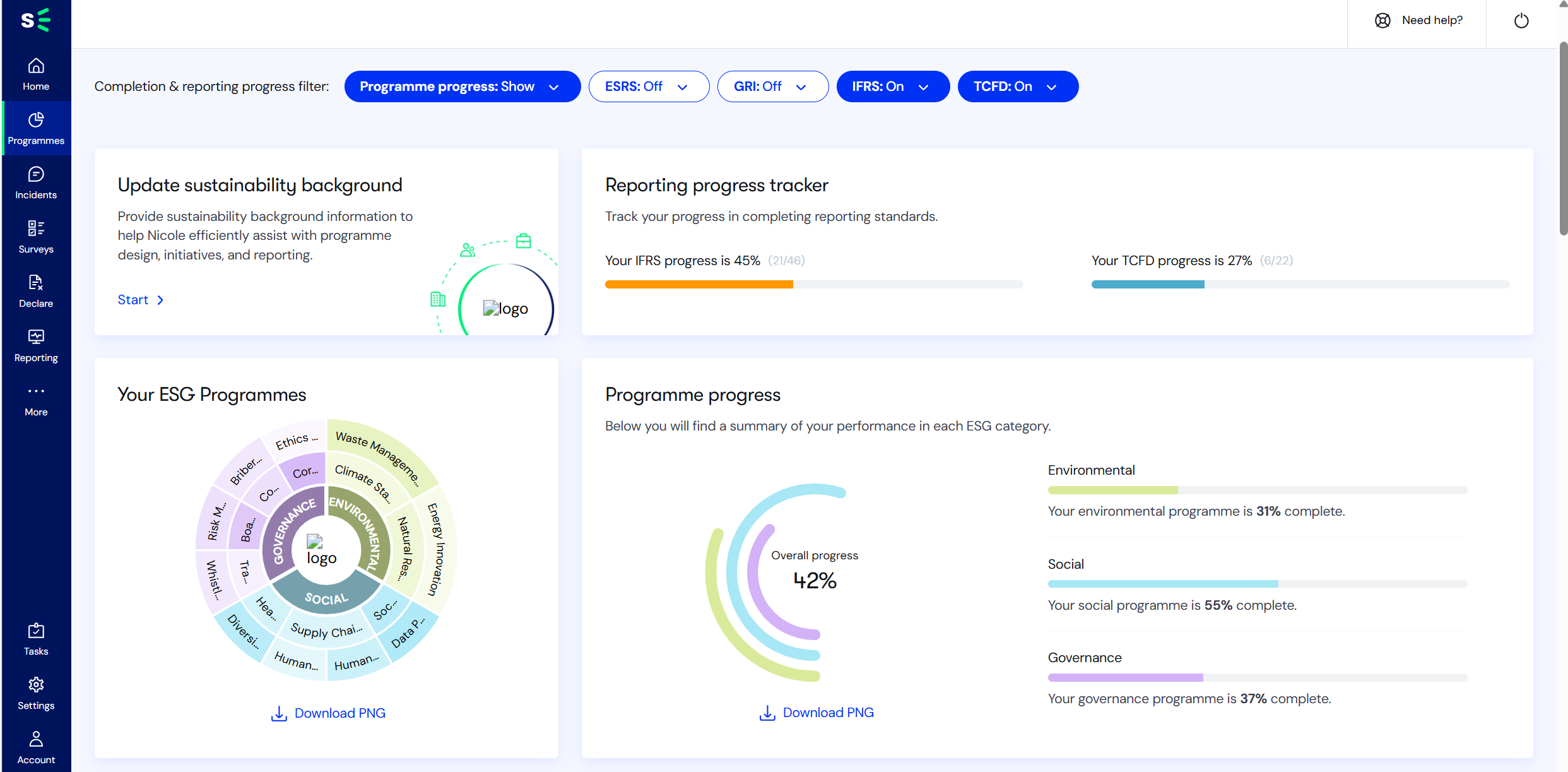
Speeki Engage® aligns with the ISO 45001 framework, consolidating fragmented safety management practices into a single system. Hazards managed in spreadsheets, training records held in HR systems, incidents stored in separate databases and inspections recorded on paper are brought together into integrated infrastructure where hazards, controls, training, incidents and performance data exist in one repository.
Instead of disconnected systems creating gaps and inconsistencies, Engage® presents your occupational health and safety management system as a unified platform.
This alignment simplifies implementation and day-to-day operations. Safety coordinators can clearly see which controls apply, supervisors access current procedures, management monitors safety performance in real time and auditors navigate the system efficiently during certification.
The platform supports structured hazard identification and risk assessment, ensuring comprehensive coverage and consistent methodology.
Built-in incident management captures near misses and injuries, supports investigations, tracks corrective actions and identifies trends that help predict future incidents.
Organisations using Engage® report 60–70 per cent reductions in administrative effort, faster incident response and measurable improvements in safety performance through better data visibility. The platform also supports ongoing audit readiness, so ISO 45001 certification validates an operating system rather than requiring special mobilisation to assemble evidence, demonstrating genuine safety management maturity and strengthening stakeholder confidence.

Want to learn more about implementing a health and safety management system and achieving certification?
Explore the Speeki Academy.
Gain an integrated certification by bundling multiple projects to save time and cost.
One audit team. One coordinated project.