
Every organisation faces bribery and corruption risk. ISO 37001 is the answer.
Speeki is a world leader in certifying anti-bribery management systems.
We help companies manage risk, avoid fines and investigation costs and contribute positively to society.
Our history in anti-bribery compliance
Scott Lane brings nearly two decades of specialised anti-bribery compliance expertise to Speeki’s ISO 37001 certification services.
Since 2000, he has led anti-bribery programmes both in-house and as a trusted adviser to multinational organisations operating in high-risk industries and jurisdictions. As founder of The Red Flag Group (acquired by Refinitiv) and now CEO of Speeki, Scott has supported organisations across the full anti-bribery lifecycle, from due diligence design to implementation of complete anti-bribery management systems.
Scott holds multiple ISO certifications and serves as a lead assessor, bringing practical experience that connects compliance requirements with real-world business operations.


Speeki’s added value
ISO 37001 certification combined with AI-driven software to manage your anti-bribery management system
ISO 37001 certification process explained
-
Beginning your ISO 37001 anti-bribery management system work starts with understanding where your organisation stands today.
The first step is a gap analysis that assesses existing anti-bribery controls against the standard’s requirements. This includes procurement processes, due diligence activities, gifts and hospitality controls and third-party risk management.
This initial review typically identifies both strengths to build on and gaps that need to be addressed, providing a clear and practical roadmap for implementation.
Organisations adopt ISO 37001 to respond to stakeholder expectations, manage bribery risk as they expand into higher-risk markets and strengthen their position in regulated industries. Certification shifts anti-bribery efforts from reactive compliance to a structured management system embedded in business operations.
Most organisations complete the certification process within six to twelve months, depending on size, complexity and the maturity of existing controls. The outcomes include stronger due diligence, clearer governance, increased stakeholder confidence and credible demonstration of ethical business practices in procurement and partner relationships.
-
Implementing ISO 37001 effectively requires more than understanding the text of the standard. Teams need to know how to apply its requirements within their specific business and risk context.
Effective anti-bribery management depends on employees across procurement, sales, legal, compliance and operations understanding not only the rules, but why they exist and how to apply them using a risk-based approach. Generic training rarely provides this level of practical insight.
Speeki’s two-day and three-day ISO 37001 training courses are designed to build practical implementation capability. The courses cover each requirement of the standard using industry-specific examples, case studies and applied exercises.
Participants learn how to carry out bribery risk assessments, design and apply due diligence procedures, implement proportionate controls and develop the documentation needed for certification.
The three-day course includes additional modules on internal audit techniques and preparation for certification assessment.
Delivered on site or remotely, the training establishes a common understanding across functions, supports faster implementation and helps embed anti-bribery practices into day-to-day operations.
-
A common mistake in ISO 37001 implementation is treating the standard as a checklist rather than as a risk management tool.
ISO 37001 requires a risk-based approach. Anti-bribery controls should be proportionate to the bribery risks an organisation faces, rather than applied uniformly without regard to context. A technology company selling software subscriptions faces very different risks from a construction business working with public-sector clients in higher-risk jurisdictions, yet both can meet the standard by designing controls appropriate to their exposure.
This starts with a structured bribery risk assessment that considers factors such as industry sector, geographic footprint, business model, third-party relationships and regulatory environment. Due diligence, approval thresholds and monitoring activities should then be calibrated to those risks. For example, a low-risk supplier may require basic screening, while a high-risk intermediary may require enhanced due diligence, beneficial ownership checks and ongoing monitoring.
The risk-based approach applies throughout the management system. Training should focus on higher-risk roles, policies should address the organisation’s specific vulnerabilities and resources should be directed to areas of greatest exposure.
Organisations that maintain this discipline avoid unnecessary bureaucracy that slows business and controls that are too weak to manage real risk. Regular risk reassessment ensures the management system evolves with the organisation and keeps ISO 37001 certification meaningful in practice.
-
The difference between passing and failing an ISO 37001 certification audit often comes down to preparation rather than the design of controls.
Organisations may spend months implementing an anti-bribery management system, only to identify gaps during the certification audit. This can lead to delays, additional remediation work and loss of confidence among stakeholders.
Speeki’s pre-certification services are designed to identify these issues before formal assessment.
A structured gap analysis reviews implementation against all ISO 37001 requirements, highlighting missing documentation, incomplete procedures and weaknesses that could result in non-conformities.
This is followed by mock audits that mirror the certification process. These include employee interviews, record reviews, control testing and examination of evidence in the same way a certification body would conduct the audit.
The process identifies both compliance gaps and readiness issues, such as employees who cannot clearly explain procedures, documentation that does not reflect actual practice, evidence that is difficult to locate and controls that exist on paper but are not operating effectively.
-
The final weeks before your ISO 37001 certification audit require careful logistical planning alongside technical readiness.
All documentation should be centrally organised and readily accessible. Auditors will review policies, procedures, risk assessments, training records, due diligence files and meeting minutes. Delays or missing information can suggest weak organisation or insufficient control.
Prepare a master index showing where each ISO 37001 requirement is addressed and where supporting evidence is located. This helps auditors navigate the system efficiently.
Interviews should be planned in advance. Select participants who understand their roles in the anti-bribery management system and can explain how procedures work in practice, not just repeat policy language. This should include representatives from higher-risk functions such as procurement, sales and finance, alongside management and compliance teams.
Audit logistics should be planned carefully. Arrange suitable meeting rooms, ensure access to relevant systems and records, prepare site visits where appropriate and confirm the availability of key personnel throughout the audit period.
Brief all participants on what to expect. Auditors will explore decision-making, risk scenarios and how controls operate day to day. Openness matters more than perfection, as auditors expect some improvement opportunities.
A well-prepared audit demonstrates operational maturity and usually runs efficiently.
-
ISO 37001 certification follows a structured two-stage audit process that typically spans four to eight weeks from initial assessment to certificate issuance.
Stage 1 is the documentation review and usually takes one to two days, depending on organisational size and complexity. Auditors review anti-bribery management system documentation, including policies, procedures, risk assessments and organisational arrangements, to confirm that the system design meets ISO 37001 requirements and that the organisation is ready for full assessment.
A Stage 1 report identifies any gaps that must be addressed before progressing. Most organisations require two to four weeks to close these findings and demonstrate readiness for Stage 2.
Stage 2 is the main certification audit and involves a comprehensive assessment of how the system operates in practice. This includes employee interviews, review of records, testing of controls and verification of evidence.
Following Stage 2, Speeki completes a technical review and certification committee approval, which typically takes a further two to three weeks before the certificate is issued.
Once certified, organisations are subject to annual surveillance audits and a full recertification audit every three years.
From initial implementation to certification, most organisations take between six and twelve months. In some cases, where existing controls are strong and resources are dedicated, the process can be achieved more quickly. Understanding the overall timeline supports effective planning, realistic expectations and minimal disruption to business operations.
-
While ISO 37001 implementation consulting must be delivered by independent firms to maintain certification integrity, Speeki supports anti-bribery programmes through training and technology.
Speeki’s two-day and three-day ISO 37001 training courses build internal capability to understand, interpret and apply the standard within an organisation. The training equips internal teams to lead implementation without creating long-term reliance on external consultants. Courses can be delivered on site or remotely, ensuring compliance, procurement, legal and operational teams share a common understanding of anti-bribery requirements.
Beyond training, Speeki’s Engage® technology platform supports efficient management of anti-bribery activities. The platform helps structure due diligence processes, supports risk assessments, centralises documentation, tracks training completion and maintains audit trails required for certification.
Engage® also supports ongoing compliance by scheduling reviews, highlighting higher-risk activity and providing management with clear oversight through dashboards.
Together, training and technology provide a practical foundation for supporting an ISO 37001 anti-bribery management system, while organisations work with their chosen implementation partners for hands-on guidance and certification preparation.
-
ISO 37001 certification costs are calculated using a standard assessment methodology applied by accredited certification bodies. This ensures a consistent approach to determining audit duration and overall certification effort.
The main cost driver is the daily auditor rate. This varies depending on the certification body, auditor experience and geographic location. The number of audit days is set using consistent ISO criteria rather than negotiated individually.
Audit duration depends on organisational size, operational complexity, bribery risk exposure and the scope of the anti-bribery management system. A smaller single-site organisation with limited third-party risk and straightforward operations may require three to four audit days across Stage 1 and Stage 2. Larger organisations operating across multiple jurisdictions or high-risk sectors often require additional audit time, sometimes across several locations and functions.
Beyond certification audits, organisations should budget for implementation-related costs. These may include staff training, development or refinement of policies and procedures, risk assessments, due diligence processes and systems used to manage reporting, controls and evidence.
Ongoing costs include annual surveillance audits and a full recertification audit every three years. First-year investment varies depending on organisational complexity and the maturity of existing anti-bribery controls, with ongoing annual costs typically lower once the system is established.
Requesting detailed quotations at an early stage allows certification bodies to assess your organisation accurately and provide realistic cost estimates, supporting effective budgeting and smoother certification planning.

Want to learn more about how to build an anti-bribery management system (ABMS) in line with ISO 37001?
Explore our insights to understand the role of the standard and how it should be implemented.
Six key reasons to get certified
1. Reduce the risk of bribery across your business.
4. Reduce the cost of ESG report assurance.
2. Improve ESG and governance ratings.
5. Improve reputation, integrity and trust.
3. Meet customer tender requirements.
6. Meet funding conditions and legal requirements.
Need technology to implement your anti-bribery management system and reduce administrative burden by more than 60%?
Speeki offers an AI-powered platform called Engage®, available to clients.
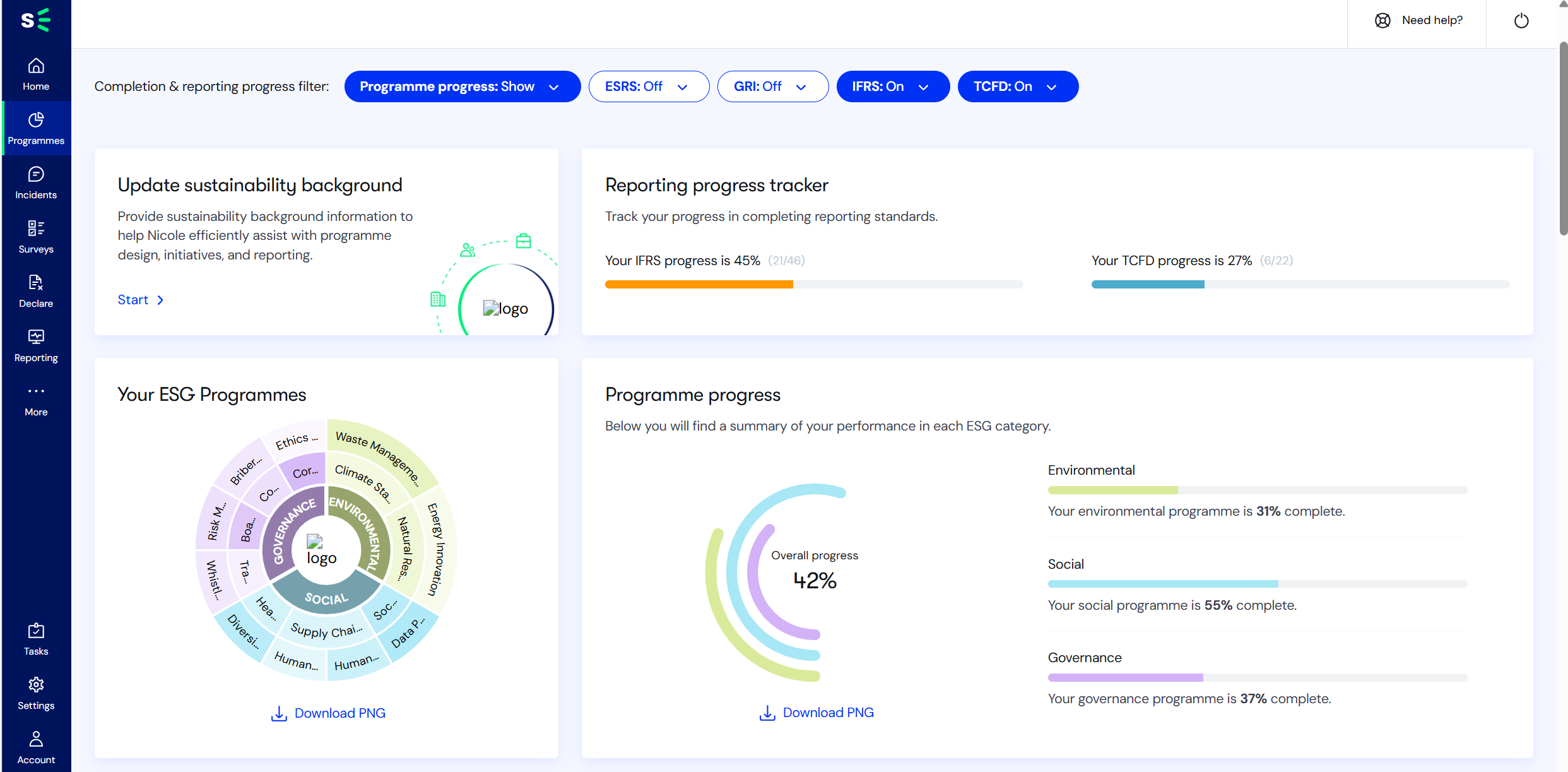
Speeki Engage® is designed to align with ISO 37001, providing a digital framework that maps directly to the requirements of the anti-bribery standard. The platform brings together policies, procedures, risk assessments, due diligence workflows, training records and audit evidence in a single, searchable system.
Rather than relying on spreadsheets, shared drives and disconnected tools, Engage® presents the entire ABMS as a coherent and traceable management system. Each control links clearly to the relevant ISO 37001 requirement, making it easier to understand coverage, identify gaps and maintain oversight. During certification audits, assessors can review documentation efficiently, avoiding delays caused by missing or hard-to-find records.
Automated workflows support consistent application of due diligence, risk assessment and approval processes. Dashboards provide management with visibility into ABMS performance, higher-risk relationships and emerging compliance issues.
Organisations using Engage® typically report significant reductions in administrative effort compared with manual systems. The platform also supports an always audit-ready approach, where certification confirms a functioning management system rather than requiring last-minute evidence gathering.
Speeki is an accredited management system certification body for ISO 37001
Speeki Europe SAS was awarded accreditation by ANAB (ANSI National Accreditation Board) to deliver ISO 37001 certification on 27 August 2019. This was Speeki Europe SAS’s first accreditation and demonstrates our commitment to the credibility and integrity of the ISO 37001 certificates we issue.
ANAB is the largest accreditation body in North America and operates across 75 countries. Our accreditation confirms compliance with ISO/IEC 17021-1, the international standard for management system certification bodies. It also reflects our commitment to high standards of qualification and competence for all individuals involved in the certification process, including our auditors.
This accreditation enables Speeki Europe SAS to certify companies globally.
Speeki Europe SAS was also awarded accreditation by the French accreditation body COFRAC to deliver ISO 37001 certification in October 2019. COFRAC is the national accreditation body for France, where Speeki Europe SAS is based.
This accreditation further confirms that Speeki Europe SAS operates in accordance with ISO/IEC 17021-1 and applies high standards of qualification and competence across audits and technical reviews, including all personnel involved in the certification process.
With accreditations from both French and US accreditation bodies, Speeki Europe SAS offers flexibility for clients with preferences for a specific accreditation system. This accreditation enables Speeki Europe SAS to certify companies globally and confirms that we do not provide advisory or management system consultancy services.
* (COFRAC: Comité Français d’Accréditation is the French accreditation body (COFRAC Accreditation N°4-0609. List of locations and scope available at www.cofrac.fr).

Want to learn more about ABMS and gaining certification?
Check out the Speeki Academy.