
The EU Environmental Crime Directive: What boards must know before May 2026
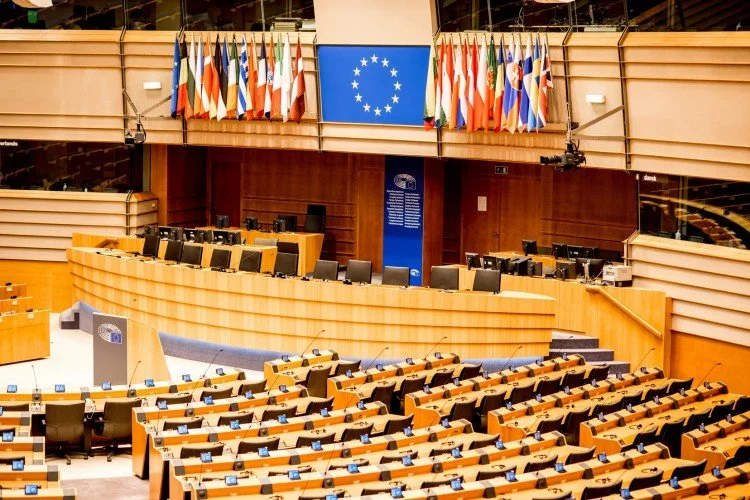
The EU has already legislated. Member states are now implementing it. Every company operating in or supplying into Europe needs to understand what the new criminal framework means for them.
The Directive in context
In April 2024, the European Union adopted its Environmental Crime Directive – formally Directive (EU) 2024/1203 – which fundamentally changes the criminal liability landscape for environmental destruction across the bloc. This Directive replaces two earlier instruments – Directives 2008/99/EC and 2009/123/EC – and represents a significant expansion in both the scope of criminal environmental offences and the seriousness of the penalties attached to them. The deadline for all 27 member states to transpose it into national legislation is 21 May 2026.[1]
Germany is one of the first to act, having published its implementing draft in October 2025. Stop Ecocide International has confirmed that Germany is among the leaders on transposition, with campaigners describing the EU framework as 'now beginning to take shape in national legislation' and noting that it 'sits within a wider global shift towards criminalising mass harm to nature.'[2]
What the Directive actually requires
The Directive does several things that boards need to understand. First, it significantly expands the range of environmental conduct that constitutes a criminal offence, covering damage to habitats, water, soil, air quality and biodiversity in ways that go substantially beyond existing national environmental criminal codes in most member states. The list of predicate offences is broad and includes the unlawful operation of industrial plants, unlawful discharge of pollutants, the killing or destruction of protected species and habitats and the unlawful trade in wildlife.
Second, and most significantly, it introduces a category of 'qualified offences' for conduct that causes widespread, long-lasting, or irreversible damage to the environment – explicitly described in the Directive's own recitals as conduct 'comparable to ecocide.' Recital 21 states that 'the consequences of intentional environmental crimes that are catastrophic in scale and comparable to ecocide should themselves constitute criminal offences.' These are not administrative violations. They are serious criminal offences with the most serious penalties in the Directive's framework.[1]
The penalties
For natural persons – individuals – member states are required to provide maximum custodial sentences of at least five years for standard offences rising to at least ten years for qualified offences comparable to ecocide. For legal persons – corporations – the Directive requires fines of at least 3% of worldwide annual turnover for the most serious qualified offences. It also permits additional sanctions including temporary or permanent exclusion from public procurement, temporary prohibition on carrying out commercial activities and mandatory remediation of environmental damage.[1]
To appreciate the scale of the corporate fine exposure: a company with €5 billion in global annual turnover faces potential fines of at least €150 million under the Directive's minimum standard. Member states are free to set higher penalties and several are expected to do so. The Directive also requires that criminal liability can attach not just to the individuals who directly caused the damage, but to those whose decisions enabled it – specifically including senior management and board members who authorised or failed to prevent the conduct.
The negligence threshold
A critical point that most boards have not yet registered is that the conduct threshold for criminal liability under the Directive is lower than most executives assume. The Directive covers damage caused by negligence as well as intention for many of its offences. This is not a law that requires a company to have set out deliberately to destroy an ecosystem. For negligent conduct, the threshold is whether a person in a position of responsibility failed to exercise the standard of care that their role required, in circumstances where the risk of serious environmental damage was known or should have been known.
In an era where the scientific understanding of environmental risk is extensive and publicly documented, and where regulators have published detailed guidance on specific environmental hazards, the argument that a senior executive 'did not know' about a material risk is becoming very difficult to sustain. Negligence is established by reference to what a reasonable person in that role, with access to that information, ought to have done. Boards that have not actively reviewed their environmental risk exposure against this standard are already in a potentially exposed position.
Supply chain and deforestation provisions
The Directive also criminalises the placing on the EU market and export of certain raw materials and products associated with deforestation and forest degradation, tracking the EU Deforestation Regulation. This is a significant expansion of criminal liability into supply chain management. The analysis by Pohlmann and Company notes that 'as it remains unclear when Article 3 of the [EU Deforestation] Regulation will take effect, implementation of the corresponding penalties will be deferred to a separate legislative project' – but the direction is unambiguous.[1]
The businesses that will be best positioned when this law lands in national courts are those that have built and independently verified environmental management systems capable of demonstrating that the risks were known, were taken seriously and were actively managed. That is not a standard any board should be trying to meet retrospectively. The May 2026 transposition deadline is not the date by which companies need to start thinking about this. It is the date by which most of Europe's major economies will have criminal law in place to enforce it.
References
[1] Pohlmann & Company, 'Bill to Amend Environmental Criminal Law by Implementing the Ecocide Directive' (6 November 2025). https://www.pohlmann-company.com/en/bill-to-amend-environmental-criminal-law-by-implementing-the-ecocide-directive/
[2] Stop Ecocide International, 'Germany Moves to Criminalise Cases Comparable to Ecocide as EU Directive Begins Entering National Law' (24 December 2025). https://www.stopecocide.earth/bn-2025/germany-moves-to-criminalise-cases-comparable-to-ecocide-as-eu-directive-begins-entering-national-law