
Every organisation needs an effective compliance management system.
ISO 37301 provides the guidance.
Speeki has a long heritage in compliance.
Our experts have been involved in building, reviewing, auditing and certifying compliance systems around the world across multiple topics.
Our history with compliance
Scott Lane brings nearly two decades of specialised compliance expertise to Speeki’s ISO 37301 certification services.
Since 2000, he has led compliance programmes both in-house and as a trusted adviser to multinational organisations operating in high-risk industries and jurisdictions. As founder of The Red Flag Group (acquired by Refinitiv) and now CEO of Speeki, Scott has supported organisations from due diligence design through to full compliance management system implementation.
Scott holds multiple ISO certifications and serves as a lead assessor, bringing practical experience that connects compliance requirements with business execution.

Your compliance management system can cover the overall framework or specific compliance topics managed by your organisation. Some of the most common areas are outlined below.

GDPR and privacy compliance under ISO 37301

Sanctions and export controls compliance under ISO 37301
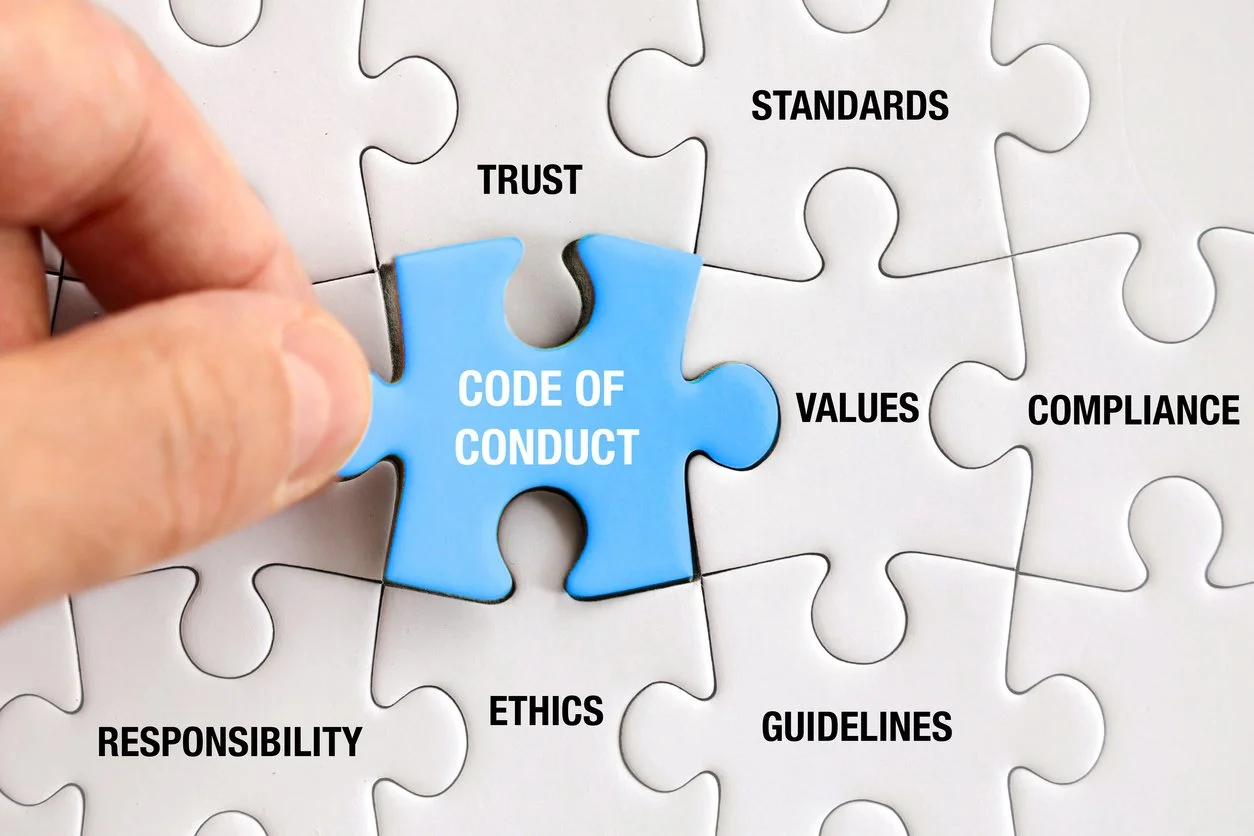
Code of conduct compliance under ISO 37301

Competition and antitrust compliance under ISO 37301

Anti-money laundering compliance under ISO 37301

Modern slavery compliance under ISO 37301
Unlike most certification bodies, we have in-house experience across all these areas, supported by our own qualified auditors. We can audit multiple areas at the same time within a single audit, saving you time and cost.

Speeki’s added value
ISO 37301 certification combined with AI-driven software to manage compliance programmes
ISO 37301 certification process explained
-
Beginning your ISO 37301 compliance management system work starts with understanding the full scope of your organisation’s compliance obligations and current level of maturity.
The first step is a comprehensive gap analysis that reviews your existing compliance framework against the standard’s requirements. This includes how compliance obligations are identified, how risks are managed, how accountability is assigned, how controls are implemented, how performance is monitored and how continual improvement is achieved.
This initial assessment often shows compliance activities spread across departments, managed inconsistently and with varying levels of oversight. Some obligations may be well controlled, while others lack clear ownership or effective monitoring.
ISO 37301 provides a unifying framework to bring these activities together into an integrated compliance management system. It supports consistent management of regulatory requirements, industry standards, contractual obligations and voluntary commitments.
Organisations typically adopt ISO 37301 to meet board-level governance expectations, manage regulatory complexity across jurisdictions and build sustainable compliance capability. Certification demonstrates a structured and mature approach compared with ad hoc compliance arrangements.
Most organisations complete the certification process within six to twelve months, depending on size, complexity and existing controls. The outcomes include greater efficiency, stronger risk management, increased stakeholder confidence and clearer evidence of governance maturity for regulators, investors and business partners.
-
Building an effective ISO 37301 compliance management system requires more than understanding the wording of the standard. Teams need to know how to translate requirements into practical management processes that fit their organisational context.
Compliance professionals, legal teams, risk managers and business leaders must be able to identify compliance obligations, assess compliance risks, design proportionate controls and embed compliance into day-to-day operations. These capabilities are rarely developed through generic training.
Speeki’s two-day and three-day ISO 37301 training courses are designed to build this practical implementation capability. The courses cover each requirement of the standard using applied examples, case studies and exercises relevant to different industries.
Participants learn how to develop compliance obligation registers, carry out compliance risk assessments, establish governance structures, define performance measures and create the documentation needed for certification.
The three-day course includes additional modules on internal compliance audits, assessing compliance culture and preparing for certification assessment.
Delivered on site or remotely, the training builds shared understanding across legal, compliance, operational and management teams. This supports faster implementation, reduces reliance on external consultants and helps embed a sustainable compliance culture that continues beyond certification.
-
A common implementation failure with ISO 37301 is treating compliance as a uniform burden rather than as proportionate risk management.
ISO 37301 requires a risk-based approach. Compliance activities, resources and controls should reflect the significance and likelihood of compliance failures an organisation faces. A pharmaceutical manufacturer operating in heavily regulated markets has very different compliance risks from a professional services firm, yet both can meet the standard by designing systems appropriate to their context.
This starts with structured compliance risk assessments that consider industry sector, regulatory environment, geographic footprint, business model, stakeholder expectations and the consequences of non-compliance. Resources and controls should then be prioritised accordingly.
Higher-risk compliance obligations require stronger controls, more frequent monitoring and targeted training. Lower-risk obligations can be managed through simpler, proportionate arrangements.
The risk-based approach should apply throughout the management system. Reviews should focus on higher-risk areas, training should be directed at critical roles and obligations, and management attention should be concentrated where exposure is greatest.
Organisations that maintain this discipline avoid unnecessary bureaucracy in low-risk areas and insufficient control over high-risk obligations that could lead to regulatory action, reputational harm or operational disruption. Regular reassessment ensures the compliance management system remains effective as regulations evolve and the organisation changes.
-
The difference between a smooth ISO 37301 certification and a difficult audit outcome usually comes down to preparation rather than underlying compliance capability.
Organisations often invest significant effort in building a compliance management system, only to identify gaps during the certification audit. This can lead to delays, additional cost and frustration for management.
Speeki’s pre-certification services are designed to reduce this risk.
A structured gap analysis reviews the compliance management system against all ISO 37301 requirements, identifying missing documentation, incomplete processes, weak governance arrangements and control gaps that could result in non-conformities.
This is followed by mock audits that reflect the certification process. These include interviews with compliance personnel and business leaders, review of compliance obligation registers and risk assessments, testing of controls and examination of evidence in the same way an auditor would conduct the assessment.
The process identifies not only technical gaps but also operational readiness issues. These may include unclear ownership of obligations, documentation that does not reflect actual practice, limited understanding of compliance responsibilities and processes that exist on paper but are not operating effectively.
Detailed findings and targeted remediation guidance allow organisations to address issues before formal assessment. For organisations working to tight timelines or managing complex compliance environments, this preparation supports smoother certification and reduces the risk of major findings. It also strengthens internal audit capability and supports more effective compliance management beyond initial certification.
-
The final weeks before an ISO 37301 certification audit require careful planning and stakeholder preparation.
All compliance documentation should be organised and readily accessible. Auditors will review the compliance obligation register, risk assessments, policies and procedures, governance arrangements, training records, performance measures, management review minutes and incident records. Delays or missing information can indicate weak management or insufficient evidence.
Prepare a master matrix that shows where each ISO 37301 requirement is addressed and where supporting documentation is located. This helps demonstrate coverage and allows auditors to navigate the system efficiently.
Interviews should be planned in advance. Select participants who understand how the compliance management system operates in practice, including compliance leaders, business managers, legal counsel and employees with defined compliance responsibilities in higher-risk areas.
Audit logistics should also be considered carefully. Arrange suitable meeting facilities, ensure access to relevant systems and records, plan site visits where operational processes need to be demonstrated and confirm the availability of key personnel throughout the audit.
Brief all participants on what to expect. Auditors will assess decision-making, understanding of compliance obligations and whether the system reflects actual practice rather than documentation alone. Transparency is more important than perfection, as auditors expect to identify some improvement opportunities.
Well-prepared audits demonstrate management system maturity and are typically completed efficiently, often within two to four days depending on organisational size and complexity.
-
ISO 37301 certification follows a standard two-stage audit process that typically spans four to eight weeks from initial assessment to certificate issuance.
Stage 1 is the documentation review and usually takes one to three days, depending on organisational size, compliance complexity and scope. Auditors review compliance management system documentation, including compliance obligation registers, risk assessments, policies, governance arrangements and operational procedures. The purpose is to confirm that the system design meets ISO 37301 requirements and that the organisation is ready for full assessment.
A Stage 1 report identifies documentation gaps or structural issues that must be addressed before progressing. Most organisations require two to four weeks to close these findings and demonstrate readiness for Stage 2.
Stage 2 is the main certification audit and involves detailed on-site assessment. This includes stakeholder interviews, review of records, testing of controls and verification of evidence to confirm that the compliance management system operates effectively in practice across relevant functions.
Following Stage 2, the certification body completes a technical review and certification committee approval, which typically takes a further two to three weeks before the certificate is issued.
Once certified, organisations are subject to annual surveillance audits, usually lasting one to two days, and a full recertification audit every three years.
From initial implementation to certification, most organisations take between six and twelve months. Where existing compliance frameworks are reasonably mature and resources are dedicated, certification can be achieved more quickly. Understanding this timeline supports effective planning, expectation management and audit scheduling with minimal disruption to operations.
-
While ISO 37301 implementation consulting must be delivered by independent firms to preserve certification integrity, Speeki supports compliance management systems through training and technology.
Speeki’s two-day and three-day ISO 37301 training courses build internal capability to understand, interpret and apply the standard within an organisation’s specific context. The training is designed for compliance, legal, risk and operational teams, enabling them to lead implementation without long-term reliance on external consultants. Courses can be delivered on site or remotely to ensure consistent understanding across all relevant functions.
Beyond training, Speeki's Engage® technology platform supports efficient operation of a compliance management system. The platform helps manage compliance obligations, distribute policies and procedures, track training completion, monitor control performance, manage incidents and corrective actions and maintain the audit trails required for certification.
Engage® also supports ongoing compliance through automated scheduling, performance dashboards and alerts for overdue actions or emerging risks. This reduces administrative effort while strengthening governance and oversight.
Together, training and technology provide a practical foundation for building and maintaining an ISO 37301 compliance management system, while organisations work with their chosen consulting partners for hands-on implementation and certification preparation.
-
ISO 37301 certification costs follow a standard assessment methodology applied by accredited certification bodies, which supports consistency in how audit duration is calculated.
The main cost variable is the daily auditor rate. This varies by certification body, auditor expertise and geographic region, while the number of audit days is determined using consistent ISO criteria.
Audit duration is influenced by organisational size, operational complexity, scope of compliance obligations and the number of personnel with compliance responsibilities. A single-site organisation with a limited compliance scope may require three to four audit days across Stage 1 and Stage 2. Larger organisations with complex regulatory obligations across multiple jurisdictions may require significantly more audit time, potentially spread across locations and functions.
In addition to audit fees, organisations should plan for implementation-related costs. These may include training for compliance teams and key stakeholders, support with documentation where required and technology platforms to manage compliance obligations, controls and evidence more efficiently than manual tools.
Ongoing costs typically include annual surveillance audits and a full recertification audit every three years. Total first-year investment varies depending on organisational complexity and existing maturity, with subsequent annual costs generally lower.
Requesting detailed quotations early allows certification bodies to assess your specific profile and provide accurate estimates, supporting realistic budgeting and smoother certification planning.

Want to learn more about how to build a compliance management system (CMS) in line with ISO 37301?
Explore our insights to understand the role of the standard and how it should be implemented.
Six key reasons to get certified
1. Reduce risk of non-compliance across your business.
4. Reduce costs of ESG report assurance.
2. Improve ratings for ESG and governance.
5. Improve reputation, integrity and trust.
3. Meet customer tender requirements.
6. Meet funding rules and legal requirements.
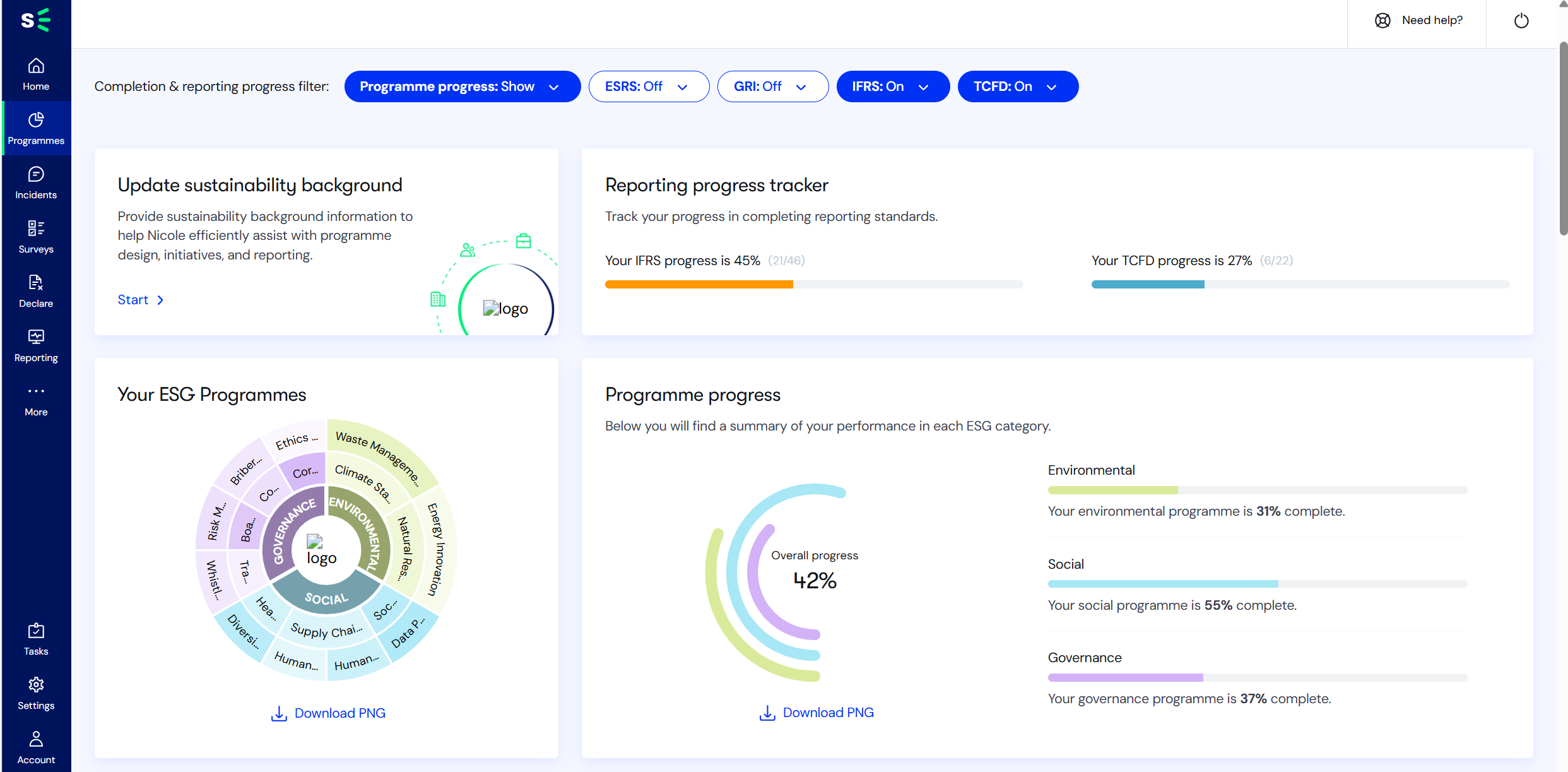
Need technology to implement your compliance management system and reduce administrative burden by more than 60%?
Speeki offers an AI-powered platform called Engage®, available to clients.
Speeki Engage® is designed to align with ISO 37301's compliance management framework, providing an integrated digital system where compliance obligations, controls and evidence are managed together. The platform maps to the standard’s requirements, from obligation identification and risk assessment through policy implementation, competence management, performance evaluation and continual improvement.
Instead of managing compliance through spreadsheets, email and disconnected systems, Engage® supports a unified approach. Compliance obligations are recorded, ownership is assigned, controls are documented, training is tracked and audit trails are maintained within a single system.
During ISO 37301 certification audits, assessors can review compliance registers linked to risk assessments, controls mapped to obligations, incident records connected to corrective actions and performance information feeding management review. The platform supports multiple compliance domains at the same time, including regulatory requirements, industry standards, contractual obligations and voluntary commitments.
Organisations using Engage® typically report significant reductions in administrative effort and improved visibility of compliance status across functions and locations. Dashboards provide management with timely insight into emerging risks, overdue actions and control gaps.
The platform supports an always audit-ready approach, where certification confirms an operating compliance management system rather than requiring separate preparation.

Want to learn more about implementing a CMS and gaining certification?
Check out the Speeki Academy.
Gain an integrated certification by bundling multiple projects to save time and cost.
One audit team. One coordinated project.