
 Image 1 of 1
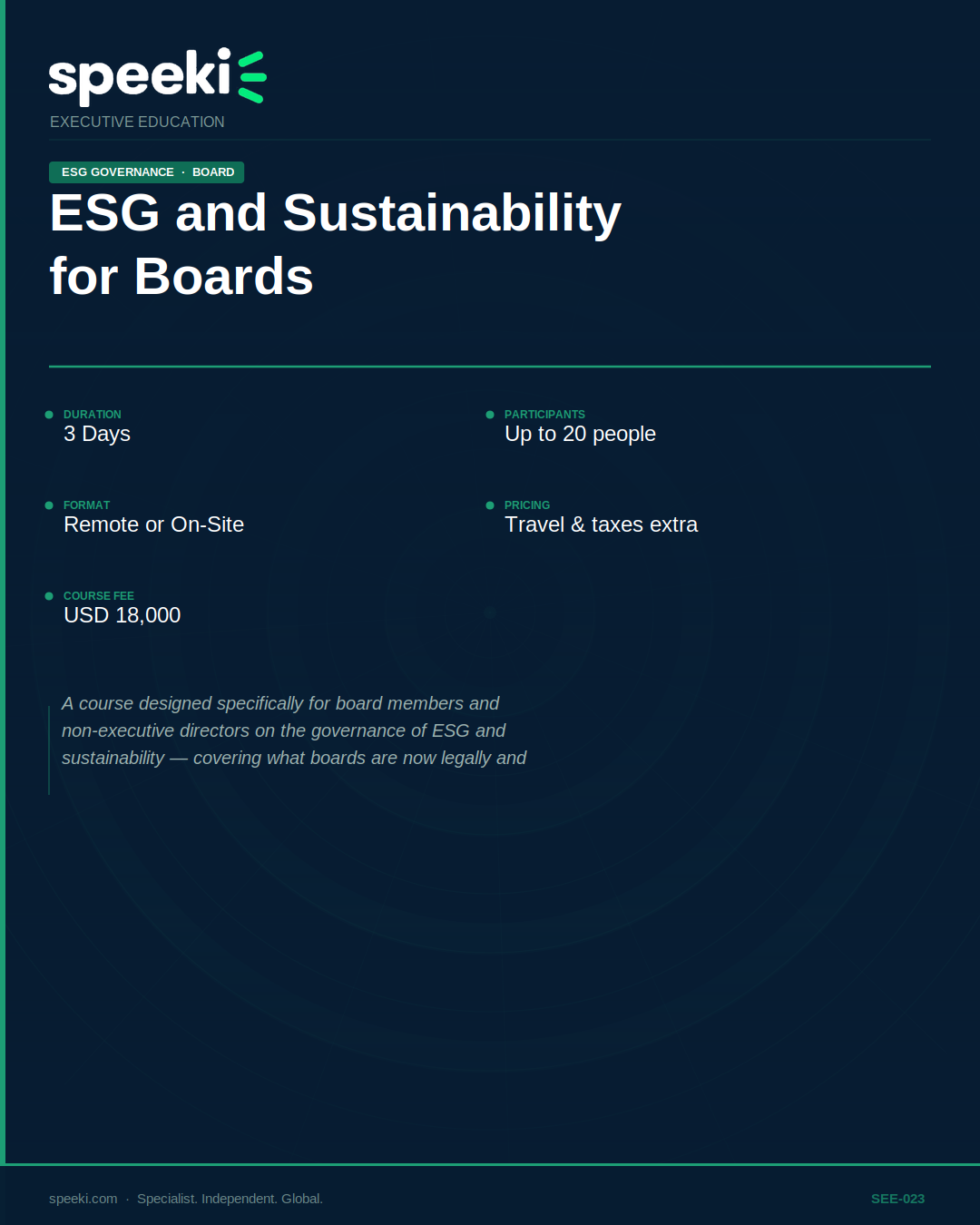
Boards are no longer passive recipients of sustainability reports. Under CSRD, TCFD, IFRS S1/S2, CSDDD, and emerging liability frameworks, governing body members carry personal accountability for the accuracy of sustainability disclosures, the adequacy of ESG risk oversight, and the credibility of climate and human rights commitments. Most board members do not yet have the working knowledge to discharge that accountability effectively — and the gap between what boards are expected to know and what most boards actually understand about sustainability is one of the most significant governance risks in major organisations today.
This course addresses that gap directly. It is not a sustainability awareness course — it is a governance and accountability course that uses sustainability as the subject. Content covers the current regulatory landscape and what it places on boards personally (CSRD, ESRS, IFRS S1/S2, CSDDD, national mandatory reporting regimes); how double materiality assessment works and what a board should be testing when it reviews one; the structure of major sustainability reporting frameworks and what they require boards to approve and attest to; how sustainability assurance works, what limited versus reasonable assurance means, and what audit committee oversight of sustainability assurance requires; climate risk governance — physical and transition risk, scenario analysis, and what TCFD and ESRS E1 expect the board to own; supply chain and human rights obligations and the board's role in HRDD oversight; what credible net zero commitments require and how to challenge greenwashing within your own organisation; the emerging liability exposure from climate attribution science and what it means for board-level governance decisions; and the questions boards should be asking their sustainability teams, their auditors, and their certification bodies.
The course uses case studies drawn from enforcement actions, regulatory findings, and legal proceedings against boards that failed to exercise adequate sustainability oversight.
Participants leave with a practical framework for exercising effective sustainability governance and a clear understanding of their personal accountability. Suitable for non-executive directors, board members, audit committee members, remuneration committee members, and chair-level executives across all sectors and geographies.
Boards are no longer passive recipients of sustainability reports. Under CSRD, TCFD, IFRS S1/S2, CSDDD, and emerging liability frameworks, governing body members carry personal accountability for the accuracy of sustainability disclosures, the adequacy of ESG risk oversight, and the credibility of climate and human rights commitments. Most board members do not yet have the working knowledge to discharge that accountability effectively — and the gap between what boards are expected to know and what most boards actually understand about sustainability is one of the most significant governance risks in major organisations today.
This course addresses that gap directly. It is not a sustainability awareness course — it is a governance and accountability course that uses sustainability as the subject. Content covers the current regulatory landscape and what it places on boards personally (CSRD, ESRS, IFRS S1/S2, CSDDD, national mandatory reporting regimes); how double materiality assessment works and what a board should be testing when it reviews one; the structure of major sustainability reporting frameworks and what they require boards to approve and attest to; how sustainability assurance works, what limited versus reasonable assurance means, and what audit committee oversight of sustainability assurance requires; climate risk governance — physical and transition risk, scenario analysis, and what TCFD and ESRS E1 expect the board to own; supply chain and human rights obligations and the board's role in HRDD oversight; what credible net zero commitments require and how to challenge greenwashing within your own organisation; the emerging liability exposure from climate attribution science and what it means for board-level governance decisions; and the questions boards should be asking their sustainability teams, their auditors, and their certification bodies.
The course uses case studies drawn from enforcement actions, regulatory findings, and legal proceedings against boards that failed to exercise adequate sustainability oversight.
Participants leave with a practical framework for exercising effective sustainability governance and a clear understanding of their personal accountability. Suitable for non-executive directors, board members, audit committee members, remuneration committee members, and chair-level executives across all sectors and geographies.