
 Image 1 of 1
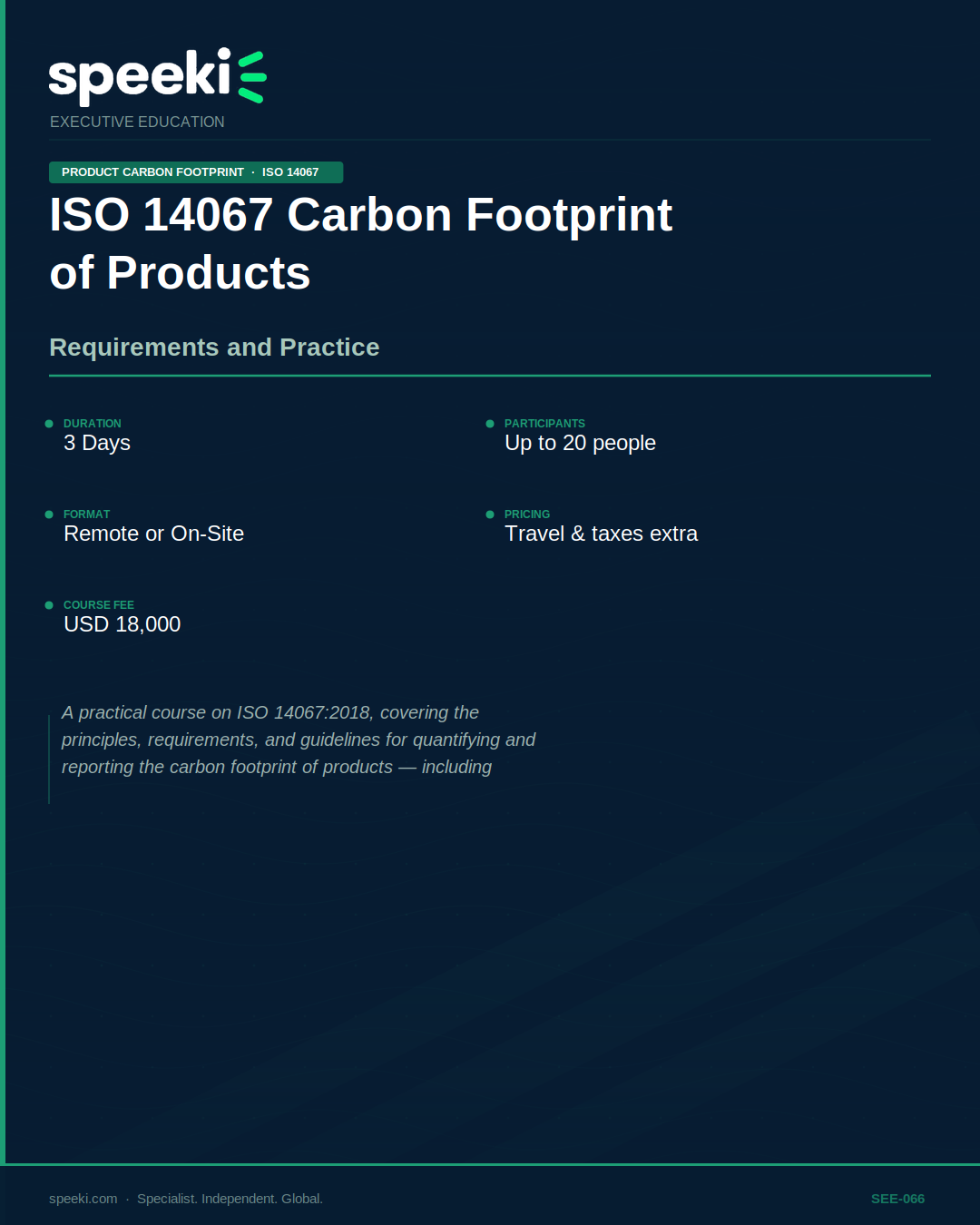
ISO 14067:2018 specifies the internationally recognised requirements and guidelines for quantifying and reporting the carbon footprint of a product (CFP), consistent with the ISO 14040/14044 LCA framework but focused specifically on climate change impacts across the full product lifecycle.
As supply chain carbon disclosure requirements intensify — through ESRS E1, CBAM (Carbon Border Adjustment Mechanism), science-based targets for value chains, and procurement requirements from major buyers — product-level carbon footprinting is moving from competitive differentiator to baseline expectation.
This course develops participants' practical capability to conduct, commission, and evaluate ISO 14067-compliant CFP studies. Content covers the scope and structure of ISO 14067 and its relationship to ISO 14040/14044; defining the product system, functional unit, and system boundaries for a CFP study; life cycle inventory data requirements and quality standards for CFP; the climate change impact category and characterisation methodology; specific ISO 14067 requirements on biogenic carbon (uptake, emissions, and storage in products), land-use change impacts, and soil carbon changes — the areas where most CFP studies face their most complex methodological decisions; partial CFP studies — when they are permitted and how they must be disclosed; quantification of carbon removal and storage; reporting requirements and how to communicate CFP results transparently; how ISO 14067 connects to ISO 14040/14044, ESRS E1, GHG Protocol Scope 3, CBAM, and Environmental Product Declarations (EPDs) under ISO 14025; and worked CFP quantification exercises across product categories including manufactured goods, food and agricultural products, and services.
Suitable for sustainability and ESG teams, product managers, supply chain professionals, procurement teams, and those responsible for Scope 3 emissions data, EPDs, or supply chain carbon disclosure.
ISO 14067:2018 specifies the internationally recognised requirements and guidelines for quantifying and reporting the carbon footprint of a product (CFP), consistent with the ISO 14040/14044 LCA framework but focused specifically on climate change impacts across the full product lifecycle.
As supply chain carbon disclosure requirements intensify — through ESRS E1, CBAM (Carbon Border Adjustment Mechanism), science-based targets for value chains, and procurement requirements from major buyers — product-level carbon footprinting is moving from competitive differentiator to baseline expectation.
This course develops participants' practical capability to conduct, commission, and evaluate ISO 14067-compliant CFP studies. Content covers the scope and structure of ISO 14067 and its relationship to ISO 14040/14044; defining the product system, functional unit, and system boundaries for a CFP study; life cycle inventory data requirements and quality standards for CFP; the climate change impact category and characterisation methodology; specific ISO 14067 requirements on biogenic carbon (uptake, emissions, and storage in products), land-use change impacts, and soil carbon changes — the areas where most CFP studies face their most complex methodological decisions; partial CFP studies — when they are permitted and how they must be disclosed; quantification of carbon removal and storage; reporting requirements and how to communicate CFP results transparently; how ISO 14067 connects to ISO 14040/14044, ESRS E1, GHG Protocol Scope 3, CBAM, and Environmental Product Declarations (EPDs) under ISO 14025; and worked CFP quantification exercises across product categories including manufactured goods, food and agricultural products, and services.
Suitable for sustainability and ESG teams, product managers, supply chain professionals, procurement teams, and those responsible for Scope 3 emissions data, EPDs, or supply chain carbon disclosure.