
The certification that confirms your due diligence management system is real.
Not your report. Not your ratings. Your due diligence management system — the governance, controls, accountability and processes behind everything you say about due diligence.
Independently assessed by Speeki against SPK DDMS2000:2026, the world's first due diligence management system standard.
Our difference.
Speeki Sentinel™ is Speeki's independent certification against SPK DDMS2000:2026, the Speeki Due Diligence Management System standard.
A single, pass-or-not-pass assessment — no partial scores, no maturity levels, no ambiguity about what it means.
Prove your due diligence holds up — not just say so.
You spend millions.
Many companies spend millions of dollars on due diligence annually. From in-house teams to researchers, to shared service centres, to outside providers.
Due diligence covers everything from employee background checks and supplier due diligence to export control tools, anti-bribery channel screening and ESG assessments. The amount of due diligence is staggering and growing.
Yet, very few have an actual system around due diligence. Certainly not one that is documented, tested, reviewed, audited or controlled. Their "system" is often a bunch of procedures, some tools and a large budget. That is not a system. It's a missed opportunity.
Building a system according to a recognised standard and then certifying conformity with that standard brings real value, could simplify procedures and even save money.

We deliver a certification. Not a tool.
Speeki Sentinel™ has one job: to independently verify that an organisation's due diligence management system genuinely satisfies SPK DDMS2000:2026, a global standard for corporate due diligence.
It is not software you install, and it is not a service where Speeki performs your due diligence on your behalf. Your due diligence stays entirely yours, built and operated by you.
Speeki's role is limited to assessing that system against the standard, independently, and confirming whether it holds up. That separation is what makes the certification worth anything. Speeki is never grading its own work.
Certified, or not. Nothing in between.
Speeki Sentinel™ certification is single-outcome: an organisation either satisfies every applicable requirement of SPK DDMS2000:2026, or it does not.
There are no tiers, no percentage scores, no "substantially conformant". A graduated certificate leaves anyone relying on it to work out what the grading actually means. A single-outcome certificate means exactly one thing, consistently, regardless of which organisation holds it or which assessor issued it.
If your organisation is still building towards conformance, that's a legitimate stage to be in — just describe it honestly as self-assessed, not certified. The Sentinel™ name applies to one thing only: a completed, independently verified certification.
New legislation now requires due diligence.
Due diligence is a massive industry with too few controls and reviews.
As more and more legislation requires due diligence across a range of counterparties, there is surprisingly little guidance and there are surprisingly few standards on how to conduct due diligence and what a due diligence system looks like.
Speeki changed that with SPK DDMS2000:2026 and its Speeki Sentinel™ certification against that standard.
In our view, due diligence can be a business enabler when done right. When done poorly, it is a collassal waste of time and money and may open you up to enforcement and fines.
We test what's actually there
A Speeki Sentinel™ certification doesn't stop at policy documents. Assessors examine the evidence a real management system produces:
Is risk appetite a documented decision made deliberately at governing body level — or an assumption nobody actually signed off on?
Does evidence meet the corroboration standard the risk tier demands — or does a high-stakes finding rest on a single, uncorroborated questionnaire response?
Is competence demonstrated and verified — or simply assumed because someone has held the role for a while?
Can an override of a finding be traced to a named decision-maker and a documented reason — or did it just quietly disappear?
Is due diligence re-screened on a cadence tied to what was actually found — or left to expire, unnoticed, the moment the file was closed?
Certification confirms the answers hold up, module by module, against the full requirements of the standard.

Build your defences with a certified due diligence system.
The moment your due diligence gets tested for real — a regulator's inquiry, a litigation discovery request, a deal that falls under scrutiny after the fact — is the worst possible moment to discover your documented system doesn't hold up.
Certification is earned before that moment arrives, against a fixed, defined standard, so the answer to "can you prove it" is already sitting in your hand rather than being assembled under pressure.

It gives your governing body something real to rely on.
Boards and senior leadership are increasingly personally accountable for the adequacy of the organisation's due diligence — and most are relying entirely on assurances from the same people whose job it is to say everything is fine.
An independent Speeki Sentinel™ assessment gives a governing body something self-reported assurance cannot: confirmation from outside the organisation that the system it has approved actually works the way it was told it does.

It's the difference maker in competitive environments.
When a customer is asking about your supplier selection processes, an independently verified due diligence system is a genuine point of differentiation.
It gives a customer comfort that regulatory pressure around anti-bribery, forced labour and sanctions exposure is being managed.
Certification isn't only a defensive measure. It's a commercial asset you can put in front of a prospective client or partner before they ever ask.
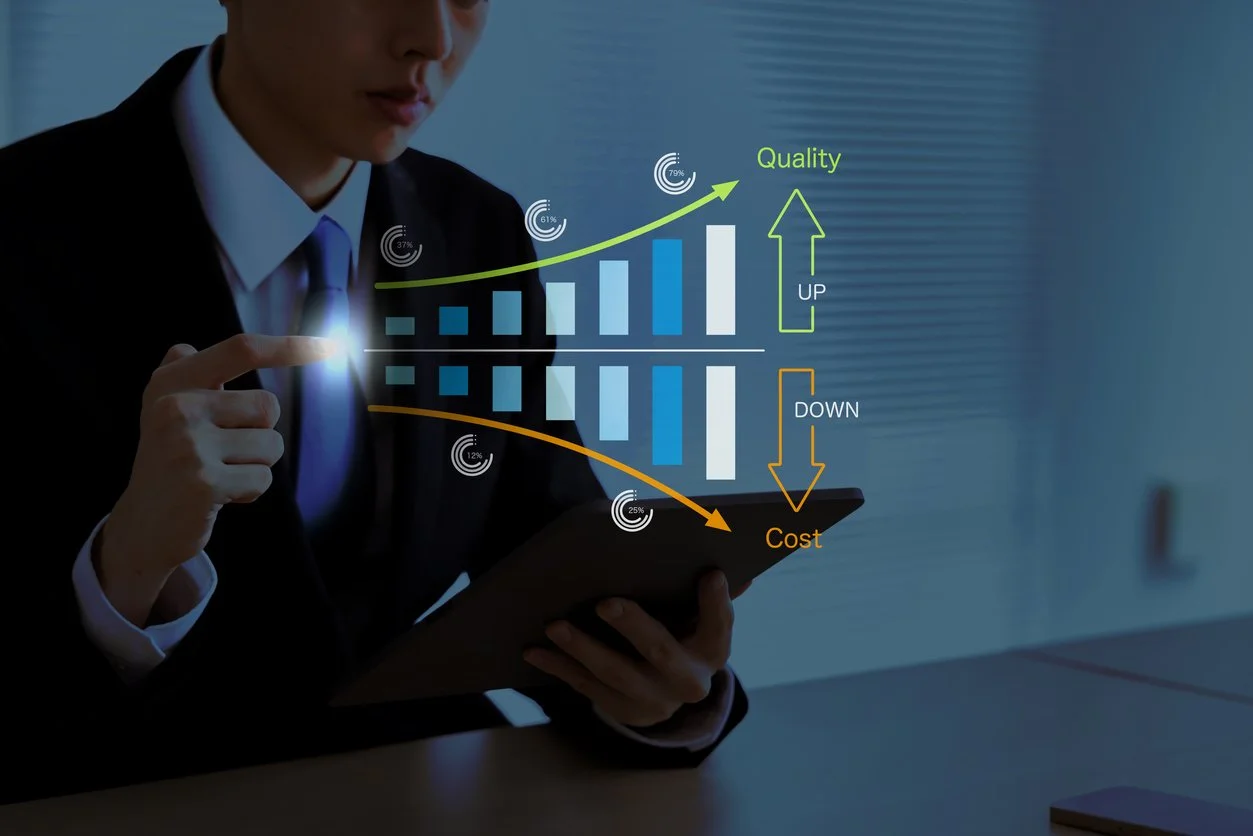
Poor corporate due diligence wastes money and impacts revenue.
A poorly executed due diligence system simply wastes resources. Focused on all the wrong things, with all the wrong controls and depth of analysis. No controls, no measurement and no understanding of whether the work being done is of value to the business or not.
A certification of your due diligence system will ensure that you are focused on what is important (context), that it meets your risk profile (risks) and that you know precisely how due diligence impacts your stakeholders (stakeholders).
Driving better results is easier with a documented system and independent verification.