

We built the standard to manage corporate green claims.

SPK GCMS3000:2026 specifies the requirements for a Green Claims Management System — the internal programme an organisation must operate to ensure that its environmental claims are accurate, substantiated, and maintained over time. Organisations certify their system against this standard. Speeki audits that system and awards Speeki Verdant™ certification.
Scott Lane, CEO and Founder, and Lead Auditor
Why we built a standard and what it seeks to achieve
Speeki is at the forefront of building standards that fill the current gap in the compliance, governance and sustainability industries.
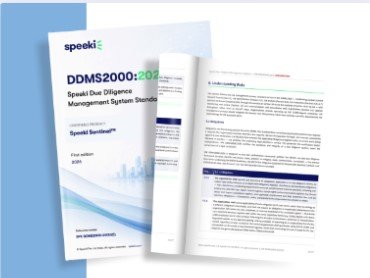
SPK GCMS3000:2026 is Speeki's Green Claims Management System standard. Certify your green claims governance programme.
Speeki Verdant™ certification awarded to organisations whose system conforms to the standard.
The standard governs how green claims should be managed across a company – avoiding liability and maximising marketing value.
Speeki’s green claims management system standard (SPK GCMS3000:2026) is free to use and access.
In fact, we even give you limited access to our technology platform, Speeki Engage®, to build your green claims programmes according to the standard.
5 reasons why this is a system, not just a policy
You can add SPK GCMS3000:2026 into 'My Frameworks' within the Speeki Engage® platform for no charge.
Where do we access the SPK GCMS3000 standard?
Click on the image to access the standard online.
You can also access it here.
Can you get certified on the standard?
Yes. Welcome to Speeki Verdant™.
For certification solutions on GCMS3000, check out Speeki Verdant™.

A management system standard for organisations that make environmental claims.
Environmental claims appear on packaging, websites, advertising, procurement submissions, investor materials and executive communications. Until now, no single management system standard has governed how an organisation builds, manages, substantiates and continuously improves the programme through which those claims are made.
SPK GCMS3000:2026 is that standard.
It is built on the ISO Annex SL harmonised structure — the same architecture as ISO 9001, ISO 14001, ISO 27001 and ISO 45001. It is compatible with and complementary to existing management systems. Its requirements are expressed as auditable clauses: specific, numbered and independently verifiable.
An organisation that certifies its Green Claims Management System against SPK GCMS3000:2026 demonstrates to regulators, customers, investors and procurement teams that its environmental claims are governed by a structured, independently audited programme — not assembled on an ad hoc basis.
Greenwashing enforcement has arrived. The governance response is a management system.
Confirmed penalties of AUD 8–13 million in Australia and USD 4–17.5 million in the United States. The EU EmpCo Directive applying from 27 September 2026. UK fines of up to 10% of global annual turnover already active. Every major jurisdiction enforcing.
The common thread in every enforcement case: no managed, auditable claims governance programme. Evidence assembled after the regulator asked. Claims that aged without renewal. No pre-publication independent review. Good intentions and no documented system.
SPK GCMS3000:2026 is the governance response. Not a checklist. A certified management system with documented policies, a claims inventory, evidence management, pre-publication review requirements and a renewal programme — independently audited by Speeki.
This standard is for any organisation that makes environmental claims — on products, packaging, websites, advertising, procurement responses or investor communications — and wants to demonstrate that those claims are governed by an independently audited management system.
It is particularly relevant for:
Organisations operating in the European Union, where the EmpCo Directive applies from 27 September 2026 and the ability to demonstrate a documented, independently audited claims governance programme will be material to any regulatory investigation.
Organisations whose procurement customers are requiring evidence of claims governance as a supplier qualification condition.
Organisations whose boards or audit committees are asking for assurance on environmental claims and need more than a management representation.
Organisations that have had a regulatory enquiry or are managing the risk of one.
Organisations that are growing their sustainability claims portfolio and want to build the governance infrastructure before the claims portfolio creates unmanaged exposure.
The standard applies to organisations of any size and any sector. The depth of implementation may be scaled to the organisation's complexity — but no requirement may be excluded.
Twelve sections. Every requirement auditable. Follows the ISO harmonised management system structure.
Sections 1–3 cover scope, normative references and terms and definitions, as in any ISO-aligned standard. The substantive requirements begin at Section 4.
Section 4 — Context of the organisation
Identify the internal and external issues relevant to your green claims. Map every market and channel where claims appear. Define and document the scope of your Green Claims Management System.
Section 5 — Leadership
Governing body accountability for the claims programme. A Green Claims Policy approved at board level. Claim owners assigned for every active claim in the inventory.
Section 6 — Planning
A claims risk assessment that identifies the risks associated with each claims category. Risk-based prioritisation of pre-publication review and evidence renewal. A regulatory monitoring process for all markets where claims appear.
Section 7 — Support
Resources, competence requirements and an awareness programme for all personnel involved in making, approving or maintaining claims.
Section 8 — Operation
The heart of the standard. Claims inventory. Evidence management and the evidence quality standard. Pre-publication review requirements. Claims change and material change controls. Evidence renewal programme. Supply chain claim verification. Organisation-level claims — net zero targets, carbon neutrality commitments, CSRD content used in marketing.
Section 9 — Performance evaluation
Performance monitoring metrics for the GCMS. An annual claims health check across the full inventory. Internal audit programme. Management review with governing body reporting.
Section 10 — Improvement
Continual improvement commitment. Nonconformity identification — including identification of claims that do not meet the applicable standards or regulations. Corrective action with root cause analysis and recurrence prevention.
Section 11 — Improvement (continued)
Documented corrective action records. Evidence of actions taken retained. GCMS updated as necessary to reflect systemic issues.
Section 12 — Leverage — certification, reporting and external assurance
Speeki Verdant™ certification audit requirements. Integration with Speeki GreenDesk® for individual claim assessment. Consistency between marketing claims and sustainability disclosures required — inconsistency is a material nonconformity under this section.

Who needs SPK GCMS3000:2026

Speeki Verdant™ — the certification awarded to organisations whose Green Claims Management System conforms to SPK GCMS3000:2026
Speeki Verdant™ certification confirms that an organisation's Green Claims Management System has been independently audited by Speeki and found to conform to all requirements of SPK GCMS3000:2026.
The certification covers the management system — not individual claims. Individual claim assessments and certificates are issued separately through Speeki GreenDesk® under SPK GCMS3001:2026.
What the certification covers:
— The organisation's Green Claims Policy and governance structure
— The claims inventory and how it is maintained
— The evidence management system and evidence quality controls
— The pre-publication review process for new and changed claims
— The evidence renewal programme
— Internal audit and management review
— Corrective action for non-conforming claims
How to achieve Speeki Verdant™ certification.
Step 1 — Gap assessment
Speeki conducts a review of your existing green claims governance practices against the GCMS3000 requirements. Gaps are identified and prioritised.
Step 2 — Implementation
Establish the documented Green Claims Management System: the Green Claims Policy, claims inventory, evidence management system, pre-publication review procedures and evidence renewal programme.
Step 3 — Stage 1 audit — document review
Speeki auditors review your documented GCMS against all requirements of SPK GCMS3000:2026. Findings are issued. Critical gaps must be addressed before proceeding to Stage 2.
Step 4 — Stage 2 audit — implementation assessment
Speeki auditors assess the implementation and effectiveness of the GCMS in practice. Evidence files are reviewed. Personnel are interviewed. The system is tested against the standard.
Step 5 — Certification decision and Speeki Verdant™ award
Where the system is found to conform to SPK GCMS3000:2026, Speeki awards Speeki Verdant™ certification. The certificate specifies the scope, the audit dates and the standard.
Ongoing — Surveillance audits
Surveillance audits at 12 and 24 months from initial certification maintain the certification for the three-year cycle.
Speeki GreenDesk® — individual claim assessment under SPK GCMS3001:2026
Speeki Verdant™ certifies the system. Speeki GreenDesk™ certifies the claims within it.
Speeki GreenDesk™ is the service through which individual environmental claims are submitted, assessed by Nicole® AI under SPK GCMS3001:2026, reviewed by a Speeki expert and issued a Speeki GreenDesk™ Determination Certificate — Green, Amber or Red — with full written rationale.
A GCMS3000-certified organisation submitting claims through Speeki GreenDesk™ has the most complete green claims governance posture available: an independently audited management system, and independently assessed individual claim certificates that can be referenced in regulatory submissions, board reporting, procurement responses and investor communications.
Ready to certify your green claims management system?
Talk to Speeki about Speeki Verdant™ certification under SPK GCMS3000:2026. The standard is available to prospective clients on request. Sharing it is encouraged — organisations that understand exactly what they are being assessed against are better prepared and produce better outcomes.